If you have ever watched your kids spend an entire afternoon asking questions about one thing (owls, volcanoes, why snow is white), you already understand the magic of homeschool unit studies. A unit study takes that spark and builds a week or a month of learning around it.
Instead of juggling separate subjects that never talk to each other, you pick one theme. Then you read about it, write about it, measure it, map it, build it and share it. Everyone in the family can join in, from your kindergartner to your middle schooler.
This guide walks you through what unit studies are, why they work so well at home, and exactly how to plan one without spending your whole weekend on it. Step right up.
Quick answer: Homeschool unit studies teach several subjects through one theme. To plan one, (1) choose a theme your kids already wonder about, (2) gather a basket of picture books and nonfiction, (3) list a few big questions, (4) spread activities across a simple five-day rhythm, and (5) end with a project your kids share. Stretch each activity up or down so every age can take part.
What are homeschool unit studies?
A unit study is a way of organizing learning around a central topic. Reading, writing, science, history, geography, math and art all connect back to that theme for a set amount of time, usually one to four weeks.
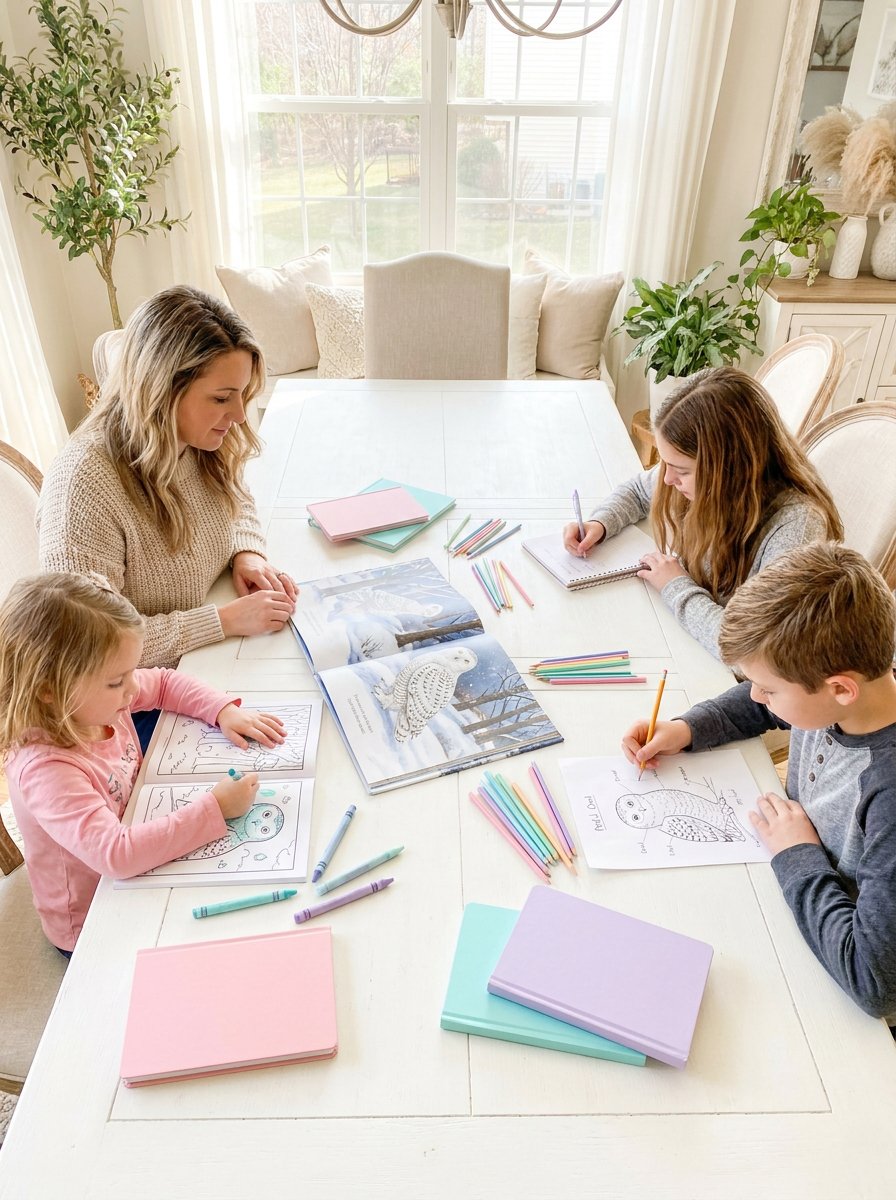
Say your theme is owls. You might read Owl Moon by Jane Yolen and talk about the quiet of a winter night. Your kids could learn owl vocabulary, write a short poem, dissect an owl pellet (they are sold as science kits), graph wingspans, and build a paper owl with movable wings. By Friday, owls are not just a "science topic." They are something your kids know from a dozen angles.
That is the heart of thematic learning: connections. When ideas link together, they are easier to remember and much more fun to explore.
Unit studies vs. traditional subject-by-subject learning
Neither approach is wrong. Many families use a mix. Here is a simple comparison so you can see what each does well.
| Unit study approach | Subject-by-subject approach | |
|---|---|---|
| How topics are organized | Many subjects linked to one theme | Each subject taught separately |
| Teaching multiple ages | Easy, everyone shares one theme | Often separate lessons per child |
| Best for | Science, history, literature, art, geography | Sequential skills like math and phonics |
| Planning style | Flexible, follows curiosity | Usually follows a set scope and sequence |
| Feel at home | Hands-on, story-driven, conversational | Structured, predictable |
A common and very workable setup: a short, separate math lesson and (for younger kids) a phonics or reading lesson each day, with a unit study covering everything else.
Why families love unit studies
They make teaching multiple ages possible. If you have a first grader and a fifth grader, you do not need two science programs. Everyone studies the same theme, and you adjust the depth. (More on that in our guide to homeschooling multiple ages.)
They follow curiosity. Kids are far more invested when the topic is something they actually care about. A unit study lets you say yes to "Can we learn about sharks?"
They are book-rich. Picture books and children's nonfiction are the backbone of most unit studies, which means lots of snuggled-up read-aloud time.
They feel less like school-at-home. Unit studies naturally include nature walks, kitchen experiments, building, drawing and dramatic play. Learning starts to look like life.
They build real understanding. When your child meets the same idea in a story, a science experiment and a writing prompt, it sticks.
How to plan a unit study, step by step
You do not need a teaching degree or a binder the size of a phone book. Here is the process we use, and it works for a one-week mini unit or a month-long deep dive.
- Choose your theme. Look for something your kids already ask about, something in season, or a picture book they love. Concrete topics (snow, bees, the moon) are easiest to start with.
- Set the length. One week is perfect for a single picture book. Two to four weeks gives you room to go deeper and finish with a bigger project.
- Gather a book basket. Aim for a mix: two or three picture books, one or two nonfiction titles, and a chapter book or read-aloud for older kids. Your library is your best friend here.
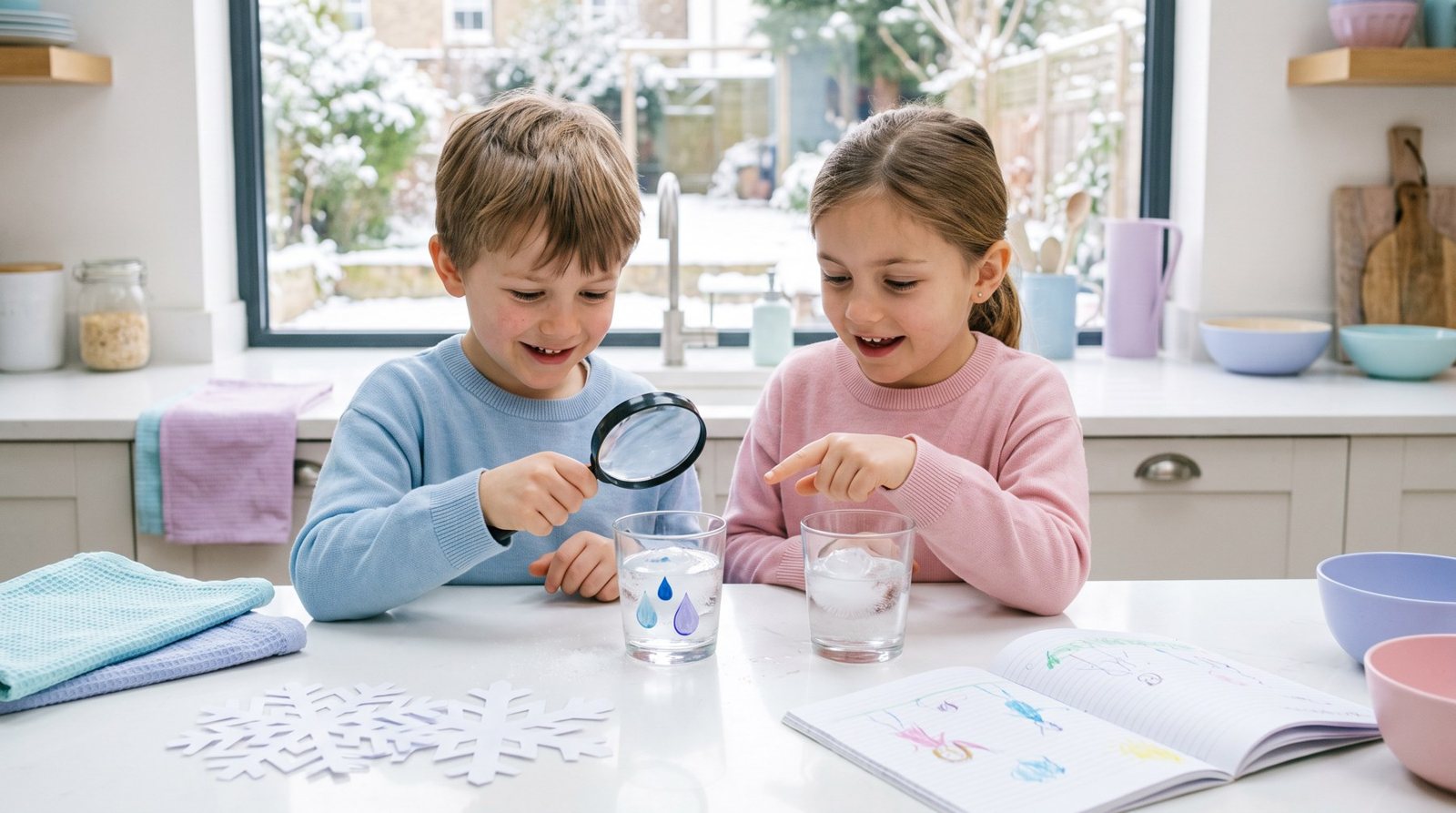
- Write three to five big questions. These guide the whole unit. For a snow unit: Why are snowflakes six-sided? Where do animals go in winter? How does snow change our town?
- Map activities to a weekly rhythm. Give each day a focus so you are not reinventing the wheel. (Our five-day rhythm is below.)
- Make a short supply list. Check your kitchen and craft bin first. Most unit study activities use paper, glue, scissors, a magnifying glass and whatever you already have.
- Plan a finale. A poster, a puppet show, a museum display on the coffee table, a short presentation. Kids love having something to show.
- Keep light records. Snap photos, save a few samples, and list the books you read. That is usually all you need.
If you want help turning a single picture book into a full week, our free Popcorn Planner walks you through it with printable pages for Littles, Middles and Bigs, plus a worked example week built around Blueberries for Sal.
A simple five-day rhythm for any unit study
The hardest part of planning is often deciding what to do on which day. A repeating rhythm solves that. Here is the one we use for every Quaintly Curious unit:
| Day | Focus | What it can look like |
|---|---|---|
| Monday | Read & Wonder | Read the anchor book, notice and wonder together, start a question list |
| Tuesday | Words & Worlds | Vocabulary, writing, geography, history, culture connected to the theme |
| Wednesday | Nature & Number | Science, nature walk, measuring, graphing, counting, data |
| Thursday | Make & Do | Art, building, cooking, crafts, experiments, games |
| Friday | Showtime | Kids share what they made or learned, present, perform, celebrate |
The beauty of a rhythm is that once your kids know it, they start looking forward to each day. "Is it Make & Do day?" becomes a regular question at breakfast.
For more ideas on fitting this into your days, see our guide to homeschool lesson planning.
What a week looks like: a sample owl unit
Here is how one week might unfold around Owl Moon by Jane Yolen (illustrated by John Schoenherr).
- Monday, Read & Wonder: Read Owl Moon aloud. Ask: What did the girl hear? Why did she have to be quiet? Start a wonder list on a big sheet of paper.
- Tuesday, Words & Worlds: Learn owl words (nocturnal, talons, prey, silent flight). Littles draw and label an owl. Middles write a short descriptive paragraph about a winter night. Bigs research where a chosen owl species lives and mark it on a map.
- Wednesday, Nature & Number: Compare wingspans of three owls by measuring them out on the floor with string. Go on an evening walk and listen. If you can, dissect an owl pellet kit and sort the bones.
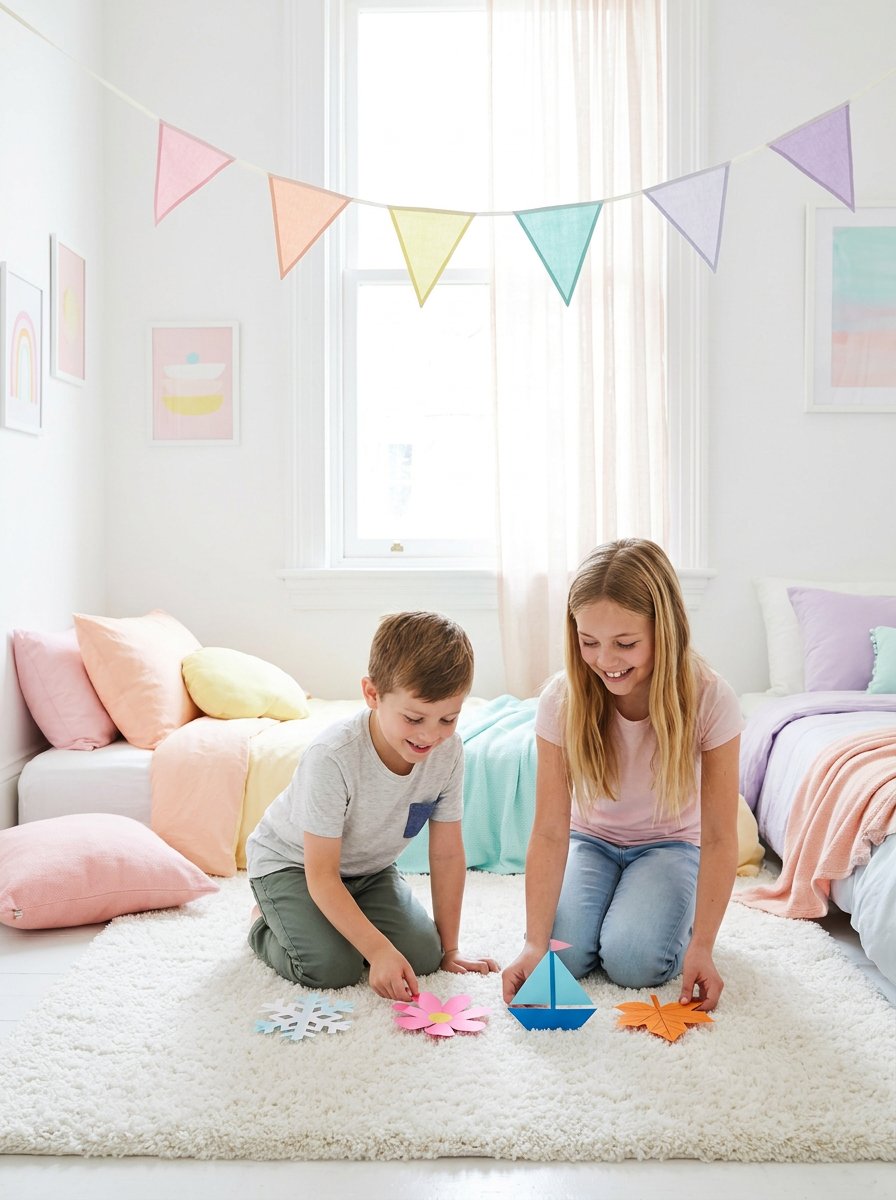
- Thursday, Make & Do: Make paper owls, or build an owl "nest box" model from a cereal box.
- Friday, Showtime: Everyone shares one thing they learned. Littles can show their labeled drawing. Bigs present their range map.
Notice that every child is doing the same thing, just at a different level. That is the secret.
Adapting unit studies for multiple ages
Unit studies for multiple ages work best when you keep the theme and books shared, then stretch the task. We think in three levels:
Littles (K-3)
Short, hands-on and full of talk. Aim for 30 to 45 minutes a day. Read aloud, act it out, draw, count, sort, build. Narration (telling back what they heard) is a wonderful early writing skill. One sentence and a picture is a full assignment.
Middles (grades 4-6)
Ready for more independence and more writing. Plan around 60 to 90 minutes a day. Middles can read nonfiction on their own, take simple notes, write a paragraph or two, run a basic experiment and record results in a chart.
Bigs (grades 7-8)
Capable of real research. Give them 90 to 120 minutes a day. Bigs can compare sources, write short reports, design their own experiments, and lead part of the Friday presentation. They also make excellent helpers for younger siblings, which builds their own understanding.
A quick trick: write the activity once, then add a "stretch" line for older kids and a "simplify" line for younger ones. For example: Measure the snowfall. Simplify: count how many cups of snow fit in a jar. Stretch: measure snow depth in three spots for five days and calculate the average.
Seasonal unit studies for the whole year
Seasonal unit studies are one of the easiest ways to start, because the topic is literally outside your window. Here are ideas to get you going.
Winter
Snow and ice science, snowflakes, animals in winter, hibernation, the night sky, the poles. Read The Snowy Day by Ezra Jack Keats, The Mitten by Jan Brett, and Snowflake Bentley by Jacqueline Briggs Martin. Our winter unit study has a full week of snow and ice activities for K-8.
Spring
Seeds and plants, birds and nests, frogs and life cycles, weather and rain. Try The Tiny Seed by Eric Carle and From Seed to Plant by Gail Gibbons.
Summer
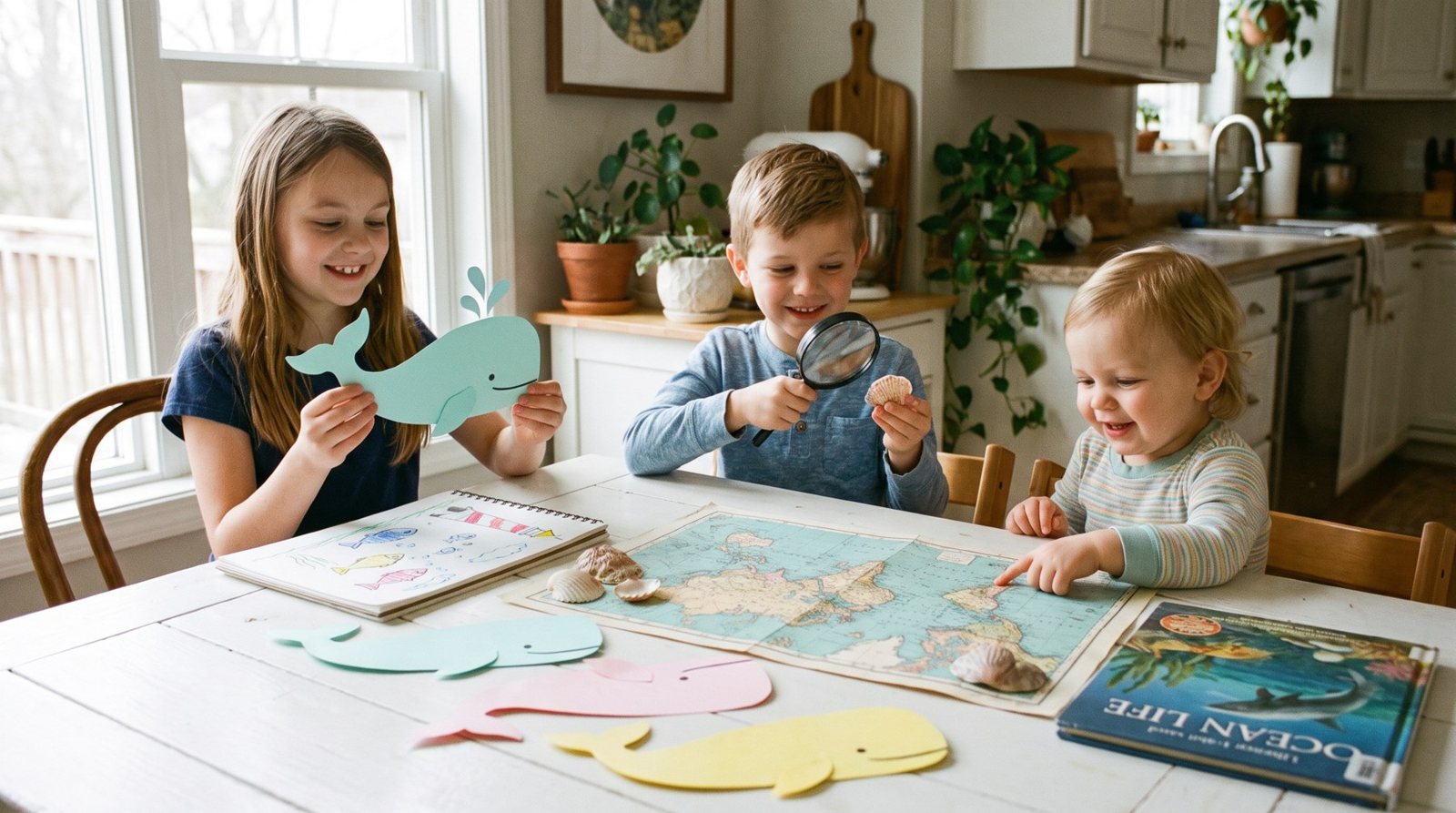
Oceans, travel and maps, insects, the sun, water play science. Over in the Ocean by Marianne Berkes and A House for Hermit Crab by Eric Carle are lovely anchors.
Autumn
Leaves and trees, harvest and apples, migration, nocturnal animals. Look for Leaf Man by Lois Ehlert and Owl Babies by Martin Waddell.
You can also build a unit around any favorite book. Our guide to picture book lesson plans shows you how to turn one beloved story into a full week of learning.
Fun extras that bring a unit study to life
The core of any unit is books and conversation. These extras add sparkle without adding much prep.
- Puzzles: A theme word search, crossword or maze reinforces vocabulary in a way kids think is play. See our roundup of educational puzzles for kids for ideas by age.
- Fact cards and word cards: Short cards with one fact or one vocabulary word each. Great for review games.
- Games and bingo: Theme bingo is a hit with mixed ages, since Littles can match pictures while Bigs match definitions.
- Puppets and dramatic play: Stick puppets of characters or animals let Littles retell stories.
- A book basket: Keep all the unit books in one spot so kids can browse on their own.
- A theme table: Set out nature finds, models and projects as a mini museum.
Common unit study mistakes (and easy fixes)
Planning too much. It is tempting to plan seven activities a day. Pick one strong activity per day and leave room for side questions and detours. Kids will add their own ideas, and those are often the best part.
Forcing every subject into the theme. If a math connection feels like a stretch, it is fine to keep math separate. Not everything has to be about penguins.
Skipping the finale. The Friday share is where kids consolidate what they learned. Even five minutes of "show and tell" counts.
Waiting for perfect. Your first unit study does not need to be Pinterest-ready. A library stack, a big question and one craft is a great start.
Going it alone. Unit studies are more fun with company. A co-op, a friend's family, or an online community gives your kids someone to share with.
How long should a unit study last?
There is no fixed rule. One week works beautifully for a single book or holiday. Four weeks lets you go deep and finish with a month-end project. Some families run one theme for a whole season, broken into smaller "acts."
The best guide is your kids. When the questions keep coming, keep going. When attention drifts, wrap up with a Showtime and move on. You can always come back to a topic next year, when everyone is a little older and ready to go deeper.
Do unit studies cover everything?
Unit studies cover science, history, geography, literature, writing, vocabulary and art especially well. Most families pair them with a separate, sequential math program and, for younger kids, a phonics or reading program. Those skills build in order, so a steady daily lesson usually works best.
Homeschool requirements vary by state. Some states list required subjects, some ask for portfolios or testing, and some ask for very little. Check your state's department of education or HSLDA's state law page to see what applies to you.
Frequently asked questions
What is a unit study in homeschooling?
A unit study is a way of teaching several subjects through one theme. Instead of separate lessons that never connect, your kids read, write, explore science, practice math and make art around a single topic, like owls, the ocean or snow. Because everything links back to the theme, kids remember more and the whole family can learn together.
How long should a homeschool unit study last?
Most families find that one to four weeks is the sweet spot. A one-week unit works well for a single picture book or a holiday. A month gives you room to go deeper and finish with a project. Watch your kids: when curiosity is still high, keep going, and when it fades, it is time to move on.
Can unit studies replace a full homeschool curriculum?
Unit studies can cover science, history, geography, literature, writing and art very well. Many families still use a separate, sequential program for math and early reading, because those skills build step by step. Homeschool requirements vary by state, so check your state's rules to confirm which subjects you need to cover.
Do unit studies work for kids of different ages?
Yes, and this is where they shine. Everyone shares the same theme, books and big questions, then each child does a version of the activity that fits their level. A kindergartner might draw and label a snowflake, while a seventh grader researches why snow crystals form six sides and writes a short report.
How do I keep records for a unit study?
Keep it simple. Take photos of projects, save a few work samples, and jot a short list of the books you read and topics you covered each week. A planner page per week is plenty. If your state requires a portfolio or specific records, check its homeschool rules or HSLDA's state law page for details.
What are good unit study topics for beginners?
Start with something concrete your kids can see, touch or go outside to find. Seasons, weather, birds, bugs, trees, the moon and stars, and favorite picture books all make excellent first unit studies. They come with plenty of library books and easy hands-on activities, so you spend less time planning and more time exploring.
Bring the whole troupe together
Homeschool unit studies are one of the kindest ways to teach at home. One theme, one book basket, one rhythm, and every child learning at their own level. Start small, follow the questions, and let Friday be a celebration.
Our Ringmaster, Gigi, grew up curled in the reading corner of her mom's classroom with a stack of library books, and she still believes the best learning starts right there: with a good book and a big question.
Step right up: Want seasonal unit studies planned for you? The Big Top is our seasonal homeschool membership: every season is a themed show in three monthly Acts, with four weeks of five-day lesson plans for Littles, Middles and Bigs, a puzzle every week, games, fact cards, a month-end project and Friday Showtime with the Troupe. One flat price of $33/month for the whole family, cancel anytime. Season 1, "The Frost Fair," opens November 27, 2026. Not ready yet? Grab the free Popcorn Planner and turn any picture book into a week of learning.