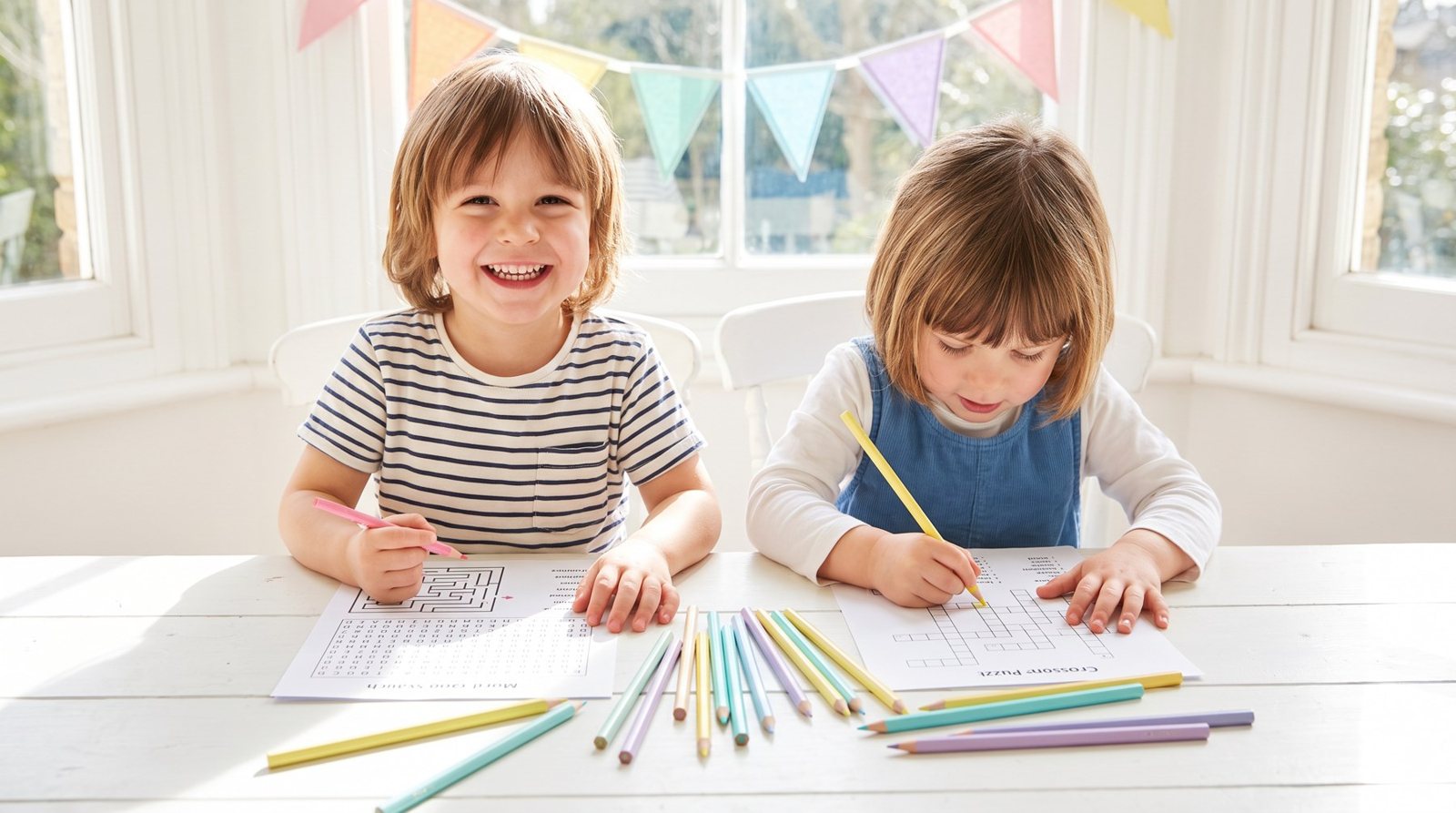
Hand a child a worksheet and you might get a sigh. Hand them a maze or a secret code and suddenly they are hunched over the page, determined to crack it. That is the quiet power of educational puzzles for kids: they turn practice into play.
But not all puzzles teach the same thing. A word search builds very different skills than a logic grid. In this guide, you will learn what each type of puzzle teaches, which ones fit each age, and simple ways to use printable puzzles in your homeschool without adding prep.
Quick answer: The best educational puzzles for kids are ones matched to a skill and a theme. Word searches build vocabulary and scanning, crosswords build spelling and recall, mazes build planning and fine motor control, secret codes build pattern and logic skills, word scrambles build phonics and spelling, and logic puzzles build reasoning. Use one themed puzzle a week for easy, joyful review.
Why educational puzzles for kids belong in your homeschool
Puzzles are low pressure. There is no red pen, just a challenge and a satisfying "got it!" at the end. That makes them a great fit for kids who resist traditional worksheets.
They also work beautifully for review. When a puzzle uses the same words your child just met in a book or experiment, solving it means recalling, spelling and connecting those ideas again. That is why we include a puzzle every week in our homeschool unit studies. It is review that kids actually ask for.
And puzzles are a lifesaver when you are teaching more than one child. A maze can keep a Little happily busy while you work with an older sibling. (Our guide on how to keep younger kids busy while homeschooling has more ideas.)
What each type of puzzle teaches
Here is a quick guide to the most common printable puzzles for kids and the skills each one builds.
| Puzzle type | Main skills | Best for |
|---|---|---|
| Word search | Letter recognition, vocabulary, visual scanning, focus | Littles and Middles |
| Crossword | Spelling, vocabulary, reading clues, recall | Middles and Bigs (simple picture crosswords for Littles) |
| Maze | Planning ahead, fine motor control, persistence | All ages (scale the difficulty) |
| Secret code | Pattern recognition, logic, decoding, spelling | Middles and Bigs |
| Word scramble | Phonics, spelling patterns, flexible thinking | Late Littles through Bigs |
| Logic puzzle | Deductive reasoning, organizing information | Middles and Bigs |
| Jigsaw puzzle | Spatial reasoning, shape matching, patience | All ages |
Word searches
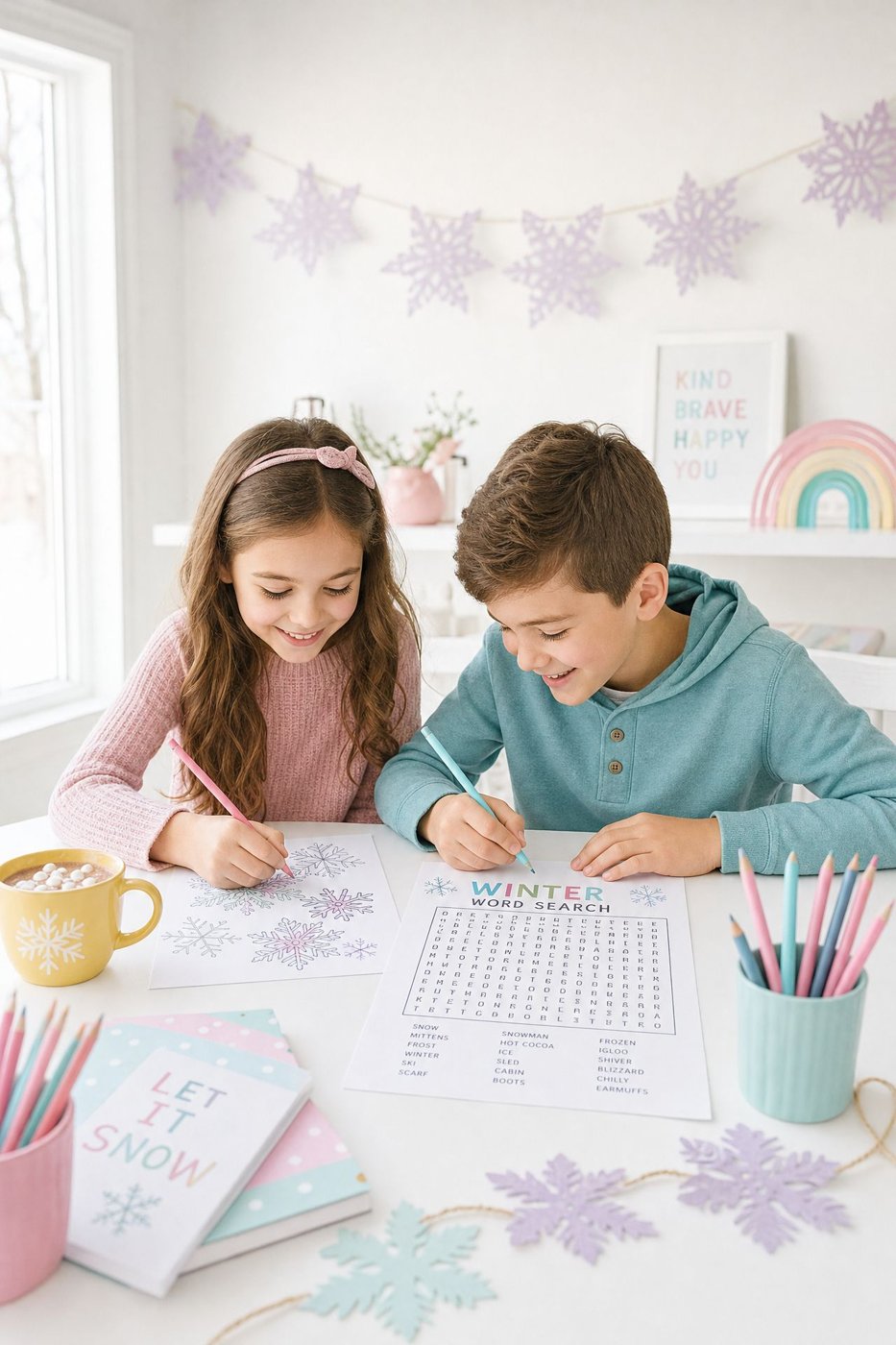
A word search for kids is often the first "real" puzzle a child tries. Hunting for letters builds visual scanning and letter recognition, and seeing theme words again and again reinforces vocabulary. For early readers, keep the grid small and the words running left to right or top to bottom. For older kids, add diagonal and backward words.
Crossword puzzles
Crossword puzzles for kids ask them to read a clue, recall a word and spell it correctly so it fits. That is a lot of thinking packed into one grid. Picture clues work well for younger kids. Older kids can handle definitions and fill-in-the-blank sentences from a book you read together.
Mazes
Mazes look simple but teach a big skill: planning ahead. Kids learn to look before they move, back up when they hit a dead end, and try again. Tracing the path also builds the hand control that supports handwriting.
Secret codes
Kids love a mystery. A secret code (where each letter is swapped for a symbol, number or another letter) teaches pattern recognition and careful decoding. Bigs can step up to cryptograms, where they work out the code themselves from letter patterns.
Word scrambles
Unscrambling "WNOS" into "SNOW" makes kids think about which letters go together and in what order. It is phonics and spelling practice in disguise.
Logic puzzles
Logic puzzles for kids, like grid puzzles ("Three friends each have a different pet..."), sudoku and simple riddles, build deductive reasoning. They teach kids to organize information, rule things out and check their answers, which are skills that carry straight into math and science.
Puzzles by level
Choosing the right level matters. Too easy is boring, and too hard is frustrating. Here is how to match puzzles to each level.
Littles (K-3)
Short and successful is the goal. Try:
- Simple mazes with wide paths
- Picture word searches with 5 to 8 large words
- Picture crosswords with a word bank
- Dot-to-dots and picture matching
- Chunky jigsaw puzzles (24 to 100 pieces)
Middles (grades 4-6)
Ready for more challenge and more reading. Try larger word searches with diagonal words, crosswords with written clues, number or symbol secret codes, word scrambles from a vocabulary list, and beginner logic grids.
Bigs (grades 7-8)
Give them puzzles that make them work. Cryptograms, challenging crosswords, sudoku, multi-step logic grids and multi-path mazes are all great choices. Bigs also love making puzzles for younger siblings, which takes real planning and content knowledge.
Want to try a few right now? Our free Frost Fair Puzzle Sampler includes a winter word search, crossword and maze for each level, ready to print.
How to use printable puzzles in your homeschool
Puzzles work best with a purpose. Here are easy ways to fit them in.
- As a theme review. After a week on snow and ice, a winter crossword helps kids recall words like crystal, hexagon and freeze. (Our winter unit study is a perfect pairing.)
- As independent work. Puzzles are ideal for building focus and self-direction. See our guide to homeschool independent work for more ideas by age.
- As a morning warm-up. A quick maze or scramble helps kids settle in and get their brains moving.
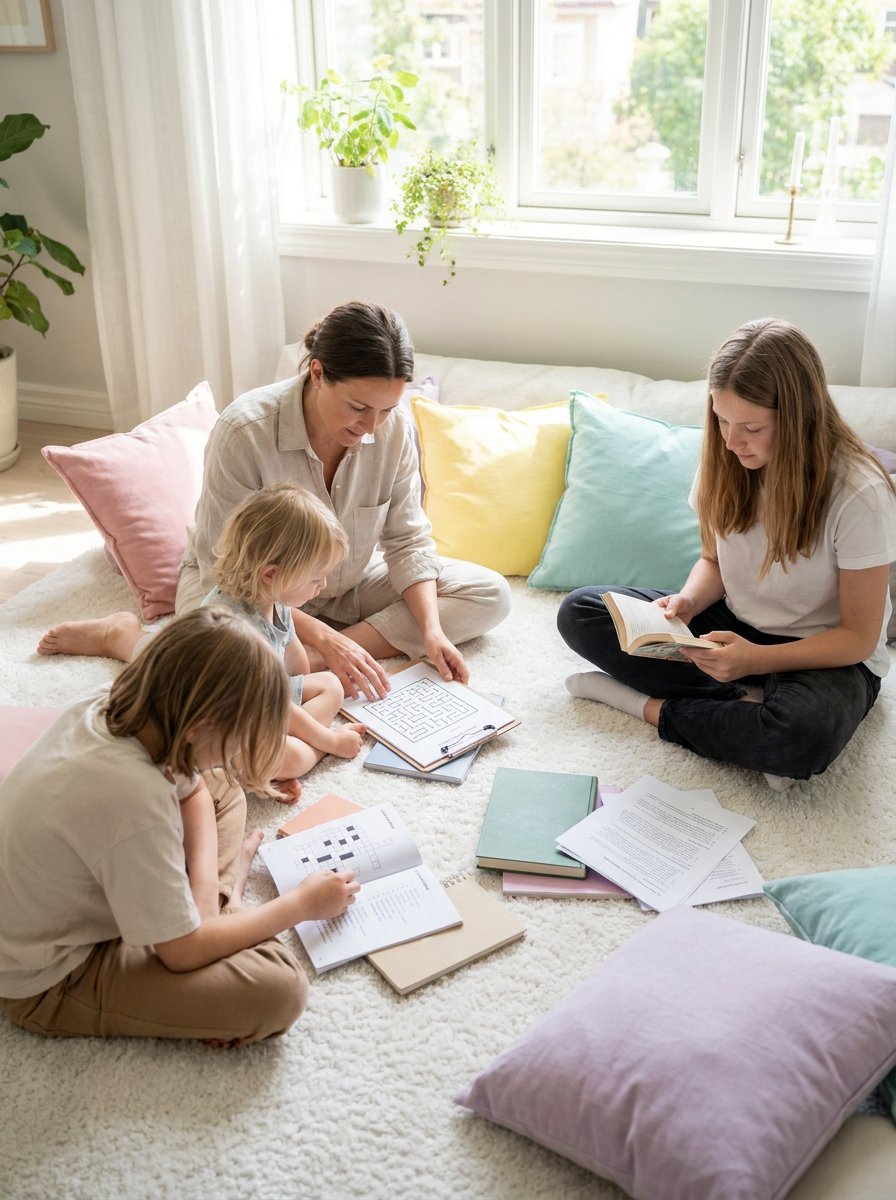
- As quiet time. Keep a folder of puzzles ready for when you need 15 minutes with another child.
- As a Friday treat. Pair a puzzle with Showtime as a fun way to wrap up the week.
A few tips to keep puzzles joyful:
- Keep answer keys handy so kids can check their own work.
- Do not grade puzzles. Let them stay play.
- Solve one together sometimes. Kids love seeing you think out loud.
- Let kids make their own puzzles from a word list. It is one of the best review activities there is.
Beyond paper: hands-on puzzles
Printables are wonderful, but hands-on puzzles build skills too. Jigsaw puzzles, tangrams, pattern blocks and building challenges strengthen spatial reasoning and problem solving. Organizations like NAEYC share plenty of guidance on the value of play-based learning for young children, and puzzles fit right into that kind of play.
Keep a few on a shelf where kids can reach them on their own. A half-finished jigsaw on a side table is an open invitation to learn.
Frequently asked questions
Are puzzles actually educational for kids?
Yes, when you choose them with a purpose. Word searches build letter recognition and vocabulary, crosswords strengthen spelling and recall, mazes practice planning and fine motor control, and logic puzzles grow reasoning. Puzzles tied to what your child is already learning turn review into play, which makes them a gentle, low-pressure tool in any homeschool.
What puzzles are best for kindergarten and first grade?
Young kids do best with simple mazes, picture matching, dot-to-dots, and word searches with a short list of large, picture-supported words running only left to right or top to bottom. Keep puzzles short so they finish with a sense of success. Jigsaw puzzles and pattern blocks are wonderful hands-on options at this age, too.
How can I use printable puzzles in my homeschool?
Use them as a warm-up, a quiet-time activity while you teach another child, a vocabulary review at the end of a unit, or a Friday treat. The key is connecting each puzzle to your current theme. A winter crossword after a snow unit, for example, helps kids recall and spell the words they just learned.
How often should kids do puzzles?
A puzzle or two each week is plenty for most families. One themed puzzle per week keeps vocabulary fresh without turning puzzles into busywork. Many kids will happily do more on their own, which is great. Let puzzles stay fun and optional rather than graded, so kids keep reaching for them.
What puzzles help older kids think critically?
Logic grid puzzles, cryptograms, sudoku, math grid puzzles and challenging crosswords all push older kids to reason, test ideas and check their work. Middle schoolers also love designing puzzles for younger siblings, which requires careful planning and a solid understanding of the content.
Let the puzzling begin
Educational puzzles for kids are one of the simplest ways to add joy to your homeschool. Match the puzzle to the skill, tie it to your theme, and let your kids feel the thrill of solving it themselves.
Step right up: Grab the free Frost Fair Puzzle Sampler for a winter word search, crossword and maze for Littles, Middles and Bigs. Want a fresh themed puzzle every single week? The Big Top includes one in every week of every Act, plus answer keys.