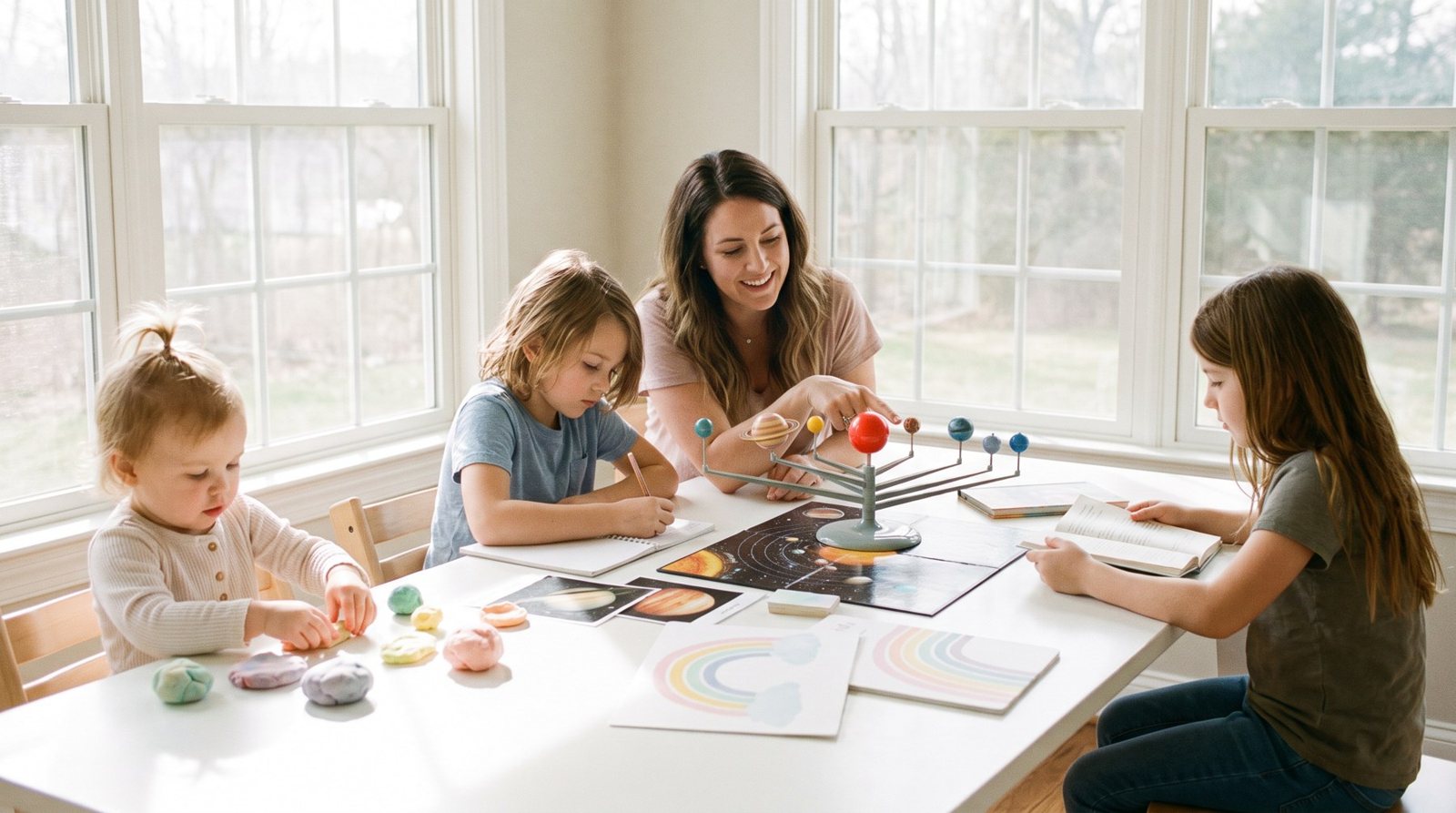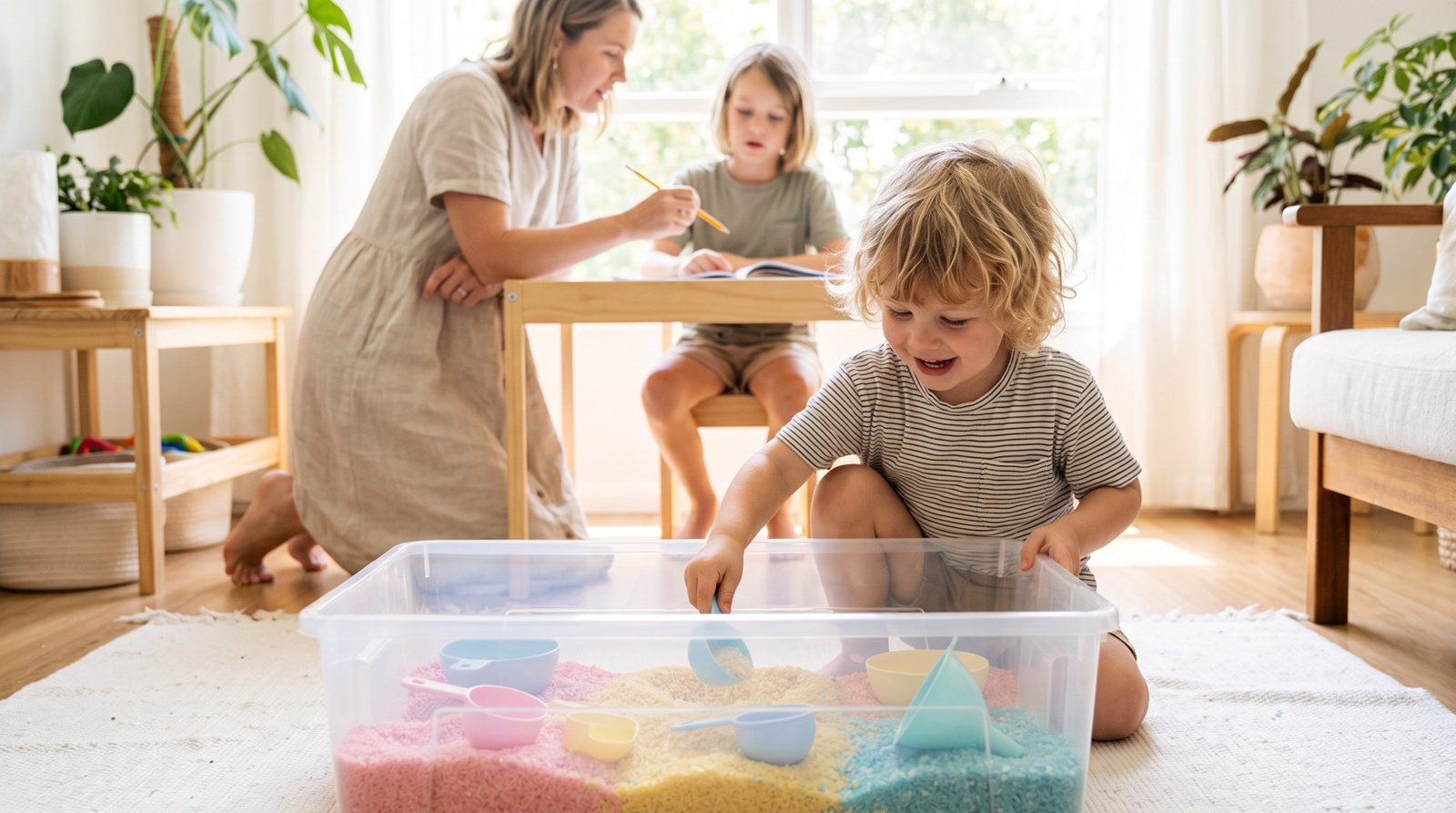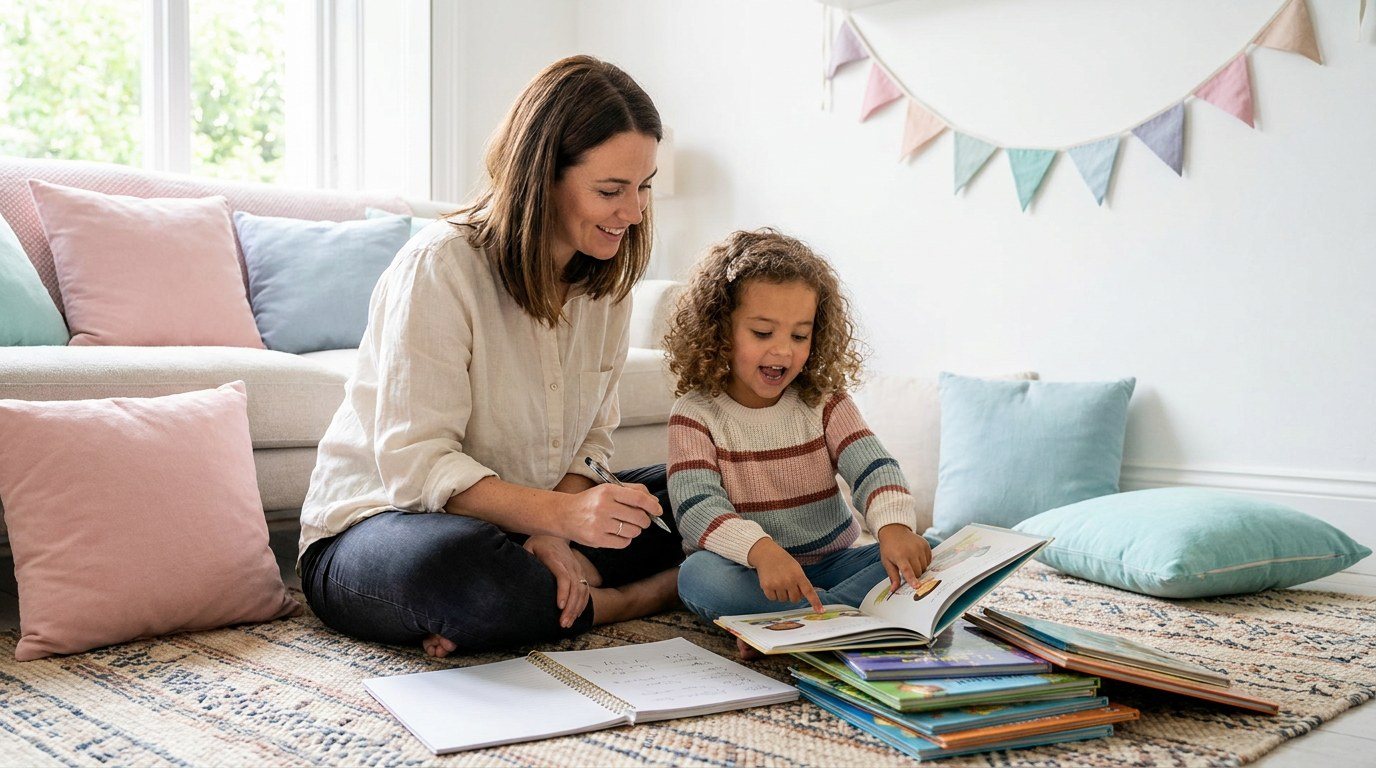
You cannot sit beside every child at once. When you are teaching phonics to your first grader, your fifth grader needs something worthwhile to do. That is where homeschool independent work comes in.
Good independent work is not busywork. It is real practice your child can handle alone, set up so they can succeed. Done well, it gives you focused one-on-one time and gives your kids something just as valuable: confidence that they can learn on their own.
Below you will find how to teach independence step by step, plus specific homeschool independent work ideas for Littles (K-3), Middles (4-6), and Bigs (7-8).
Quick answer: Homeschool independent work works best when it is (1) practice of skills your child already knows, (2) laid out on a clear visual checklist, (3) timed in short, achievable blocks, (4) backed by a "help menu" for when they get stuck, and (5) checked and celebrated together afterward.
Why independent work matters
If you teach more than one child, independent work is what makes your day possible. It is the engine behind the rotation model we describe in our guide to homeschooling multiple ages: everyone learns together, then you rotate short one-on-one blocks while the other kids work on their own.
It also builds lifelong skills. Kids who learn to read directions, manage a checklist, and push through a tricky problem are practicing the same habits they will need as teens and adults.
How to teach independent work in 5 steps
Independence is a skill, not a personality trait. Here is how to build it.
- Choose familiar work. Independent time is for practice and review, not brand-new concepts. If your child needs you to explain it, save it for one-on-one time.
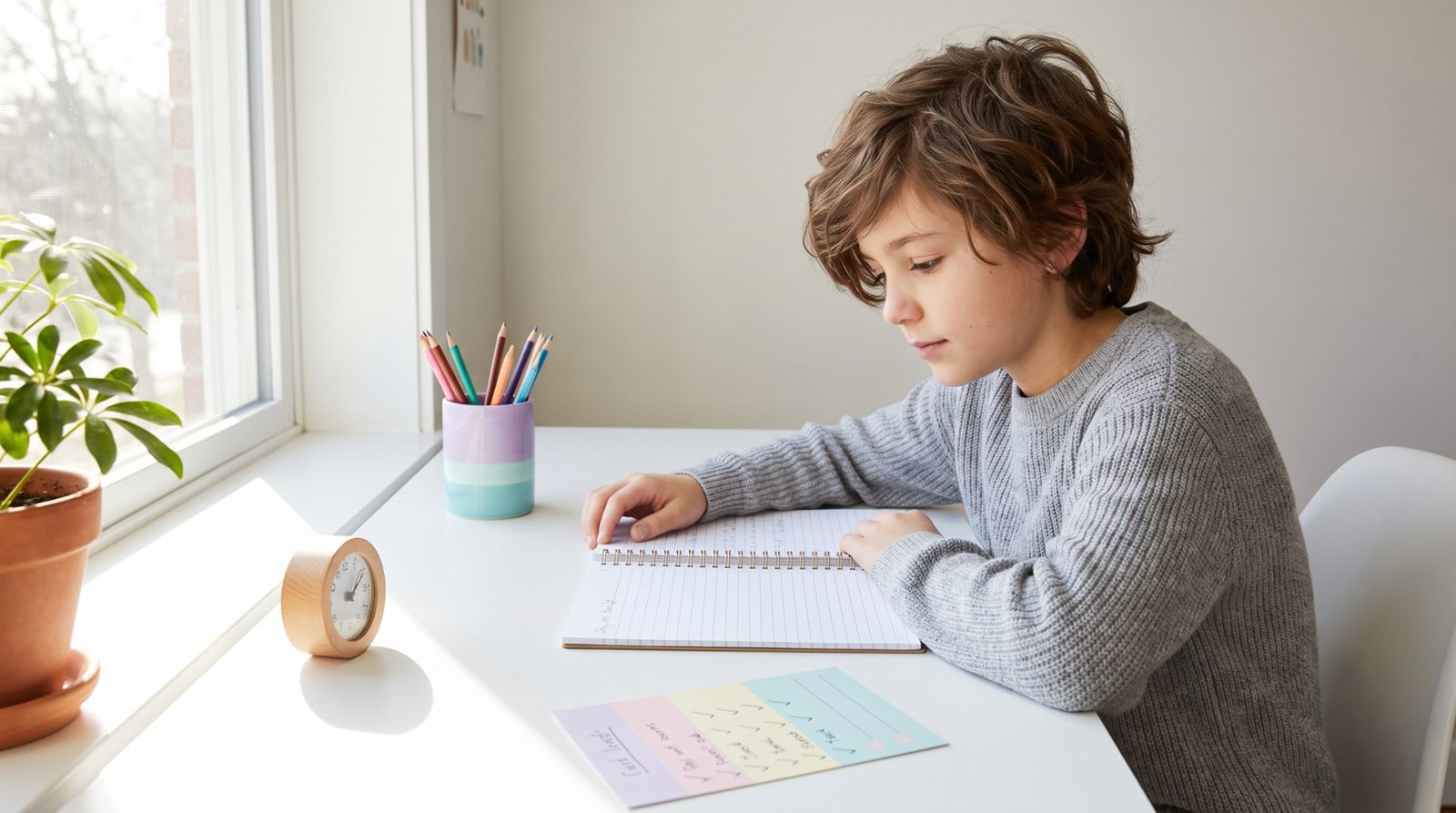
- Make it visual. Use a picture checklist for Littles, a short written list for Middles, and a weekly planner for Bigs. Kids should never have to ask "What do I do next?"
- Start short. Five to ten minutes is a real win for a young child. Add a few minutes at a time as focus grows.
- Post a help menu. When stuck: reread the directions, try the next problem, circle it and come back, then ask at the next break.
- Check in and celebrate. Look over the work together soon after. When kids see that their solo work matters, they take it seriously.
Expect a few bumpy weeks. That is normal, and it gets easier.
Homeschool independent work ideas by level
Here is a quick reference table, followed by more detail for each level.
| Level | Typical solo stretch | Great independent tasks | Best tracking tool |
|---|---|---|---|
| Littles (K-3) | 5-15 minutes | Puzzles, copywork, math manipulatives, audiobooks, drawing | Picture checklist or workboxes |
| Middles (4-6) | 15-30 minutes | Math practice, silent reading, narration, nature journal, research | Daily written checklist |
| Bigs (7-8) | 30-60 minutes | Math lessons, essays, research projects, literature study | Weekly planner |
These are general ranges. Your child may be ready for more, or less, and that is fine.
Independent work for Littles (K-3)
Young children learn best with you, so keep their solo stretches short and hands-on.
- Puzzles. Mazes, simple word searches, and dot-to-dots build focus and fine motor skills.
- Copywork. Copy one short sentence from a favorite book, like a line from Frog and Toad Are Friends by Arnold Lobel.
- Math manipulatives. Sort buttons, build patterns with blocks, or practice counting with a ten frame.
- Listening. An audiobook or picture book read-along with headphones.
- Drawing response. After a read-aloud, draw a favorite scene and tell you about it later.
- Easy readers. Rereading familiar books, such as Mo Willems's Elephant & Piggie series, builds fluency.
Workboxes are especially helpful here. Set out three to five numbered bins, each with one task, and let your Little work through them in order.
Independent work for Middles (4-6)
Middles are ready for longer stretches and more choice.
- Math practice. Review pages or games covering skills they have already learned with you.
- Silent reading. A chapter book like Charlotte's Web by E.B. White or The Wild Robot by Peter Brown.
- Written narration. A short paragraph retelling what they read.
- Nature journal. Sketch and label something from the backyard or window.
- Mini research. Find three facts about the week's topic and add them to a notebook page.
- Logic and word puzzles. Crosswords, secret codes, and word scrambles tied to what you are studying.
Our free Popcorn Planner is a handy way to build these tasks around one picture book, with separate follow-ups for each level so your Middles always have something meaningful to do on their own.
Independent work for Bigs (7-8)
Bigs can carry a real share of their own learning.
- Self-paced math. Many older kids work through their math lesson alone, then check in with you on questions.
- Writing projects. Drafting an essay, story, or report over several days.
- Research projects. Choose a question, gather sources, and prepare a short presentation.
- Literature study. Read a novel and keep a reading journal with predictions, quotes, and questions.
- Planning their week. Bigs can use a weekly planner to schedule their own tasks, which is great practice for high school.
A Big who finishes early can also help teach a younger sibling, which deepens their own understanding.
Independent work that does not feel like a worksheet
The best homeschool independent work is often the kind kids would choose anyway:
- Puzzles and logic games (our post on educational puzzles for kids has dozens of ideas)
- Audiobooks and read-alongs from your library
- Building and art projects tied to a homeschool unit study
- Nature walks with a sketchbook
- Cooking from a simple recipe card (with an adult nearby)
For more on building strong independent readers, Reading Rockets is a well-respected, free resource for parents.
Common independent work problems (and fixes)
"My child interrupts constantly." Add a help menu and a visual signal (like a small sign on the table) that means "I am teaching right now." Be patient. It often takes a few weeks to stick.
"The work is sloppy or rushed." Shorten the list and check it together soon after. Fewer, better tasks beat a long list done carelessly.
"They finish in five minutes." Keep a "when I'm done" basket with puzzles, books, and drawing supplies.
"Little ones keep pulling big kids off task." Plan activities for the youngest, too. Our guide on how to keep younger kids busy while homeschooling has 25 ideas.
Planning independent work into your week
Independent work goes smoothly when it is planned ahead, not invented on the spot. When you sit down to plan your week, mark which tasks each child can do alone and put them on their checklist. Our guide to homeschool lesson planning walks through a simple weekly planning routine.
I grew up curled in the reading corner of my mom's classroom while she taught, happily lost in library books. That kind of quiet, self-directed time is exactly what good independent work can feel like for your kids.
Frequently asked questions
What is independent work in homeschool?
Independent work is any learning a child can do without a parent sitting beside them. It usually means practicing skills they already know, like math review, copywork, silent reading, puzzles, or a project step. It frees you to teach another child one-on-one and helps kids build focus, responsibility, and confidence over time.
At what age can a child do independent schoolwork?
Most children can start with a few minutes of independent work in the early elementary years, often around five to ten minutes at a time. Middle-grade kids can usually manage longer stretches, and many older kids can follow a daily or weekly checklist. Every child is different, so start small and build slowly.
How do I get my child to work independently?
Teach it like any other skill. Choose work your child already understands, make a clear visual checklist, set a short timer, and post a help menu for when they get stuck. Check the work together afterward and celebrate effort. Gradually lengthen the time as their focus and confidence grow.
What are homeschool workboxes?
Workboxes are a system of numbered drawers, bins, or folders, each holding one task. A child works through them in order, finishing one box before opening the next. They make independent work concrete and visual, which is especially helpful for younger kids, and they are easy to refill the night before.
How much of homeschool should be independent?
There is no set rule. Younger children need most of their learning with a parent, with only short independent stretches. As kids move into the middle and upper grades, independent work naturally grows. Many families find that older kids handling about half their work on their own is a healthy balance.
Small steps, big independence
Homeschool independent work is not about stepping back from your kids. It is about setting them up to succeed on their own while you give a sibling your full attention. Start with familiar work, a clear checklist, and a short timer, then stretch it a little at a time. Before long, the whole troupe will be running its own acts.
Step right up: Need ready-to-print independent work today? Download the free Frost Fair Puzzle Sampler, with winter word searches, crosswords, and mazes for Littles, Middles and Bigs. Print, hand out, and enjoy a few quiet minutes of one-on-one teaching.