You sit down to teach fractions. Within ninety seconds, the two-year-old is on the table, the crayons are on the floor, and your fourth grader has completely lost the thread. Sound familiar?
If you are trying to keep younger kids busy while homeschooling older siblings, you are in very good company. Little ones are the wild card in almost every family that teaches more than one age. The good news: a little planning goes a long way, and you do not need expensive toys or a perfectly quiet house.
Below you will find timing tricks that buy you real teaching time, plus 25 simple activity ideas you can set up today.
Quick answer: To keep younger kids busy while homeschooling, (1) give them ten minutes of full attention before lessons start, (2) rotate a few special busy bins that only come out during school time, (3) invite them to the table with their own simple task, (4) save focused one-on-one lessons for nap or quiet time, and (5) give older siblings short helper jobs like reading aloud.
Start with timing, not toys
The best busy bin in the world will not save a lesson that is scheduled at the wrong moment. Before you buy anything, look at your day.
Fill their cup first
Little ones often act up because they want you. Spend the first ten minutes of your school time fully with the toddler or preschooler: read a picture book, build a block tower, sing a song. A child who has had your attention is far more willing to play alone afterward.
Use naps and quiet time for the hardest lessons
If your youngest still naps, that window is gold. Save math instruction, writing conferences, or anything that needs your full brain for that time. If naps are gone, try a daily "quiet time" with audiobooks and books in their room or a cozy corner.
Keep lessons short
A twenty-minute focused block is much easier to protect than an hour. Shorter lessons also suit your older kids. If you need help building a day around short blocks, our homeschool schedule post has sample daily schedules by age.
Gather everyone first
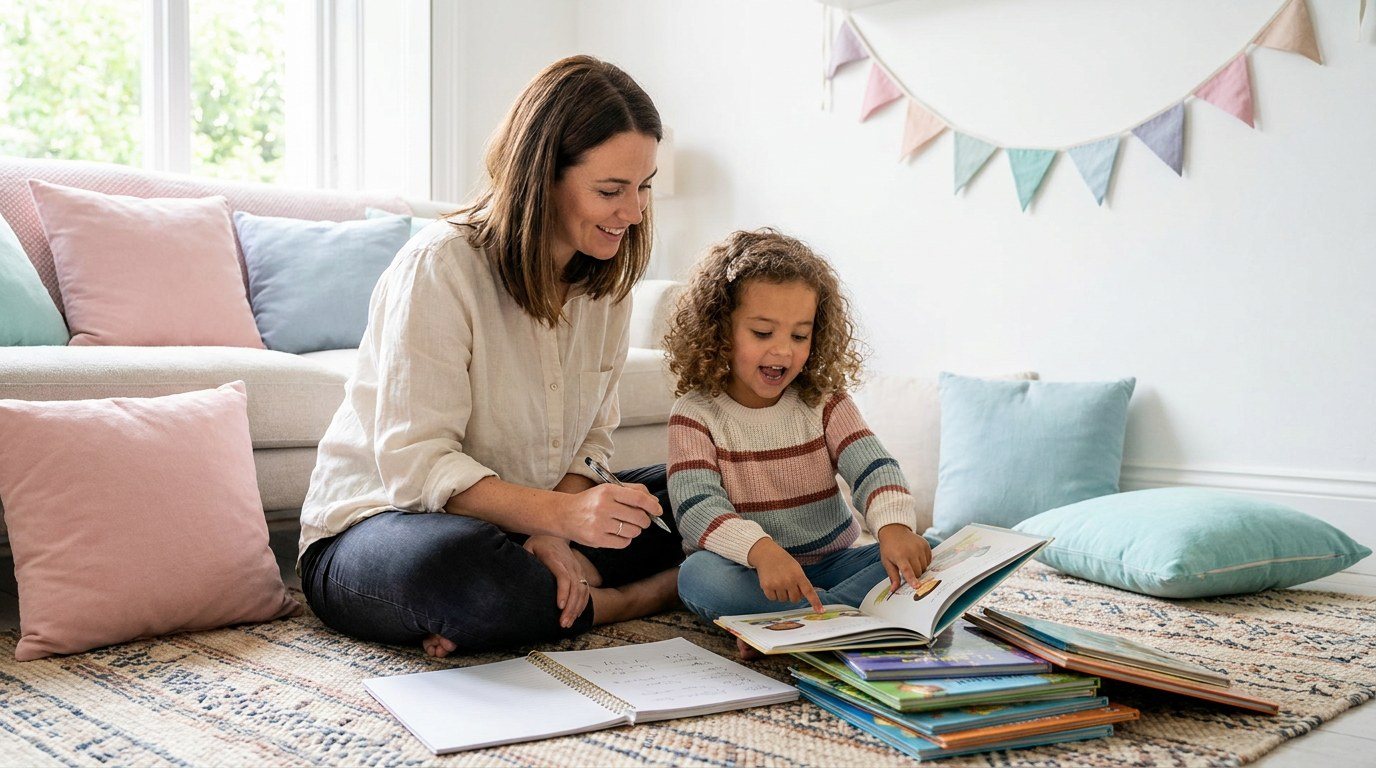
Many families start with a shared homeschool morning basket: a read-aloud, a poem, a song. Toddlers can sit in a lap or play nearby. It sets a warm tone, and it gives the little ones a sense of being part of school, too.
How busy bins work (and why rotation matters)
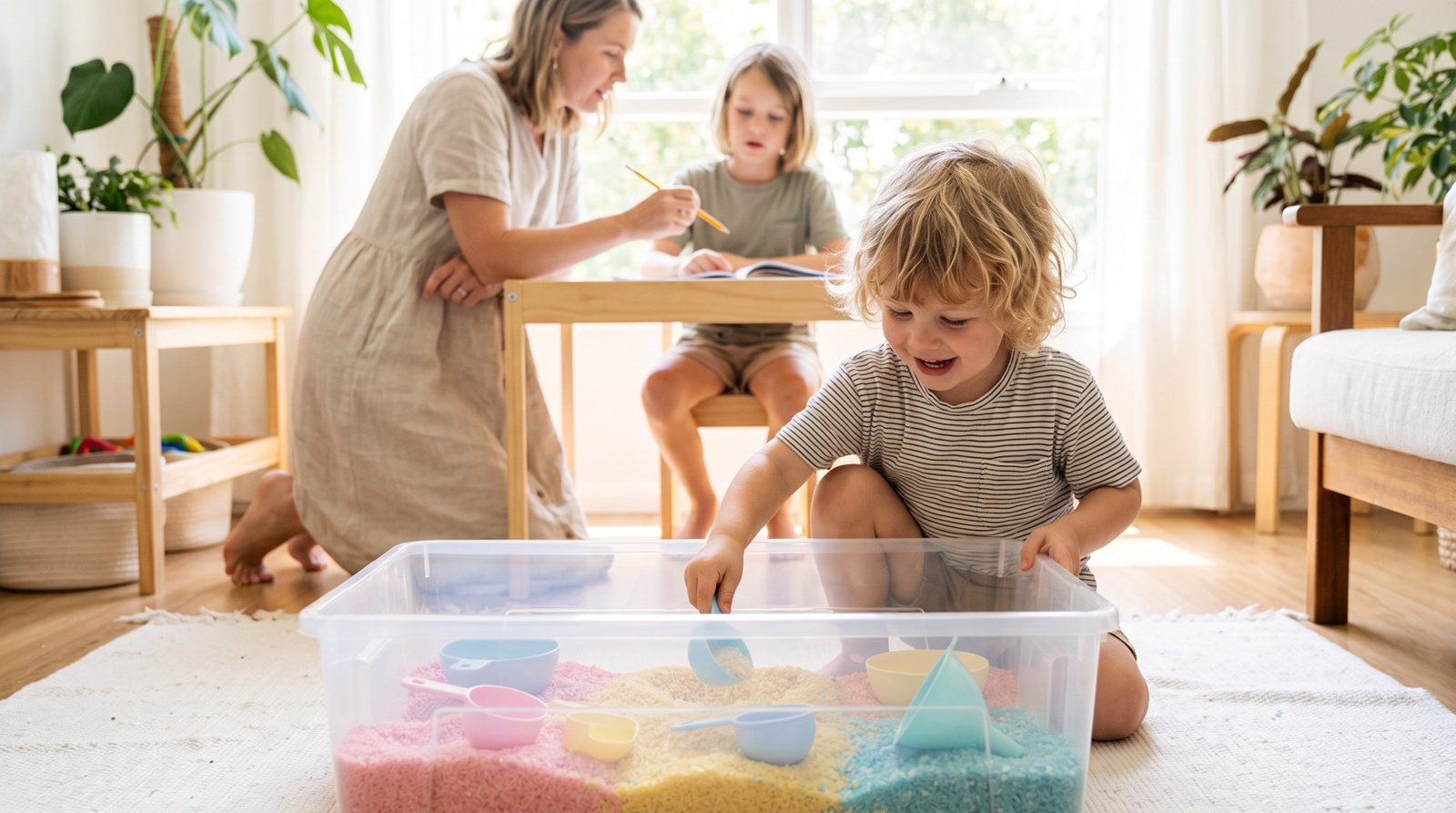
A busy bin is a small box or tray with one activity inside. The magic is not the activity. It is the novelty.
Keep 6 to 10 bins on a high shelf, and bring out only one or two per lesson block. When a bin only appears during school time, it stays exciting for weeks. Once interest fades, put it away for a while and swap in a different one.
A few simple rules keep bins working:
- One bin at a time. Return it before choosing the next.
- Easy cleanup. If you dread the mess, you will not use it.
- Age-appropriate and safe. Skip small parts for children who still mouth objects, and stay within sight. The American Academy of Pediatrics' HealthyChildren.org has helpful toy safety guidance.
25 ideas to keep younger kids busy while homeschooling
Here are activities sorted by type, so you can build a balanced bin rotation. Adjust for your child's age and always supervise.
Hands-on busy bins
- Pom-poms, tongs, and a muffin tin for sorting by color
- Chunky wooden puzzles or knob puzzles
- Play dough with cookie cutters and a small rolling pin
- Magnetic tiles or a magnet board with shapes
- Stickers and a sheet of paper (endlessly popular)
- Lacing cards or big wooden beads on a shoelace (for preschoolers)
- A dry scoop-and-pour tray with oats or large pasta, cups, and spoons
Quiet table activities
- Water painting books (just a brush and water)
- Dot markers on a large sheet of paper
- Washable crayons and a coloring page tied to the older kids' topic
- Reusable sticker scenes or felt boards
- Simple matching or memory cards
- Window clings on a low window or a mirror
Movement and play breaks
- A short dance party between lessons
- A masking-tape "road" on the floor for toy cars
- A pillow obstacle course (for a quick wiggle break)
- Outdoor sandbox or water table time while you teach on the porch
- A tunnel or play tent in the corner of the schoolroom
Listening and books
- Audiobooks or story podcasts with headphones
- A basket of board books near the table
- Picture book "reading" in a cozy corner with a stuffed animal audience
- A sibling read-aloud: Brown Bear, Brown Bear, What Do You See? by Bill Martin Jr. and Eric Carle, or Goodnight Moon by Margaret Wise Brown
Join-the-lesson jobs
- Their own "school" folder with a coloring page and stickers
- A special job, like handing out pencils or turning the pages
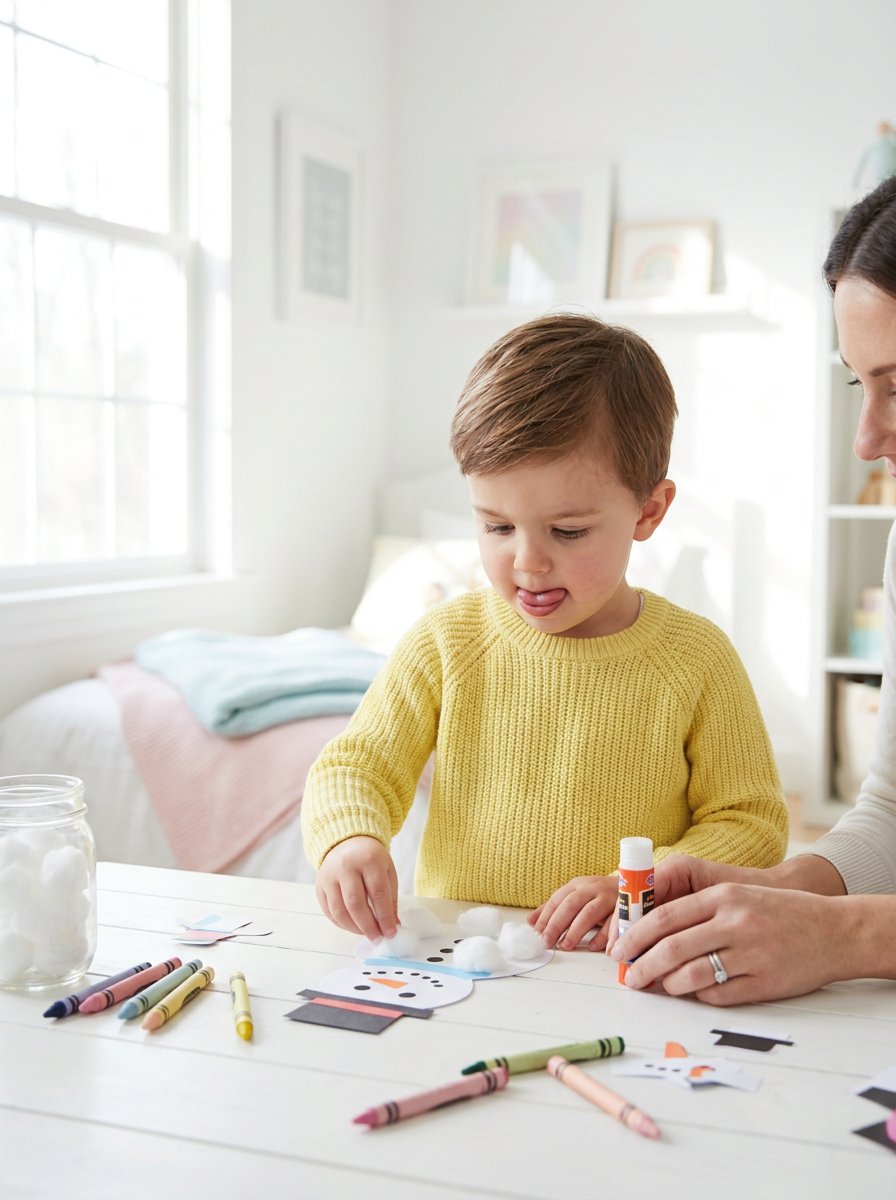
- A simplified version of the big kids' project (gluing cotton balls on a snowman while siblings write winter poems)
Your older children need things to do on their own while you work with the little ones, too. Our free Frost Fair Puzzle Sampler has winter word searches, crosswords, and mazes for each level, which makes it an easy, self-running activity for big kids during toddler time.
Invite them in instead of shutting them out
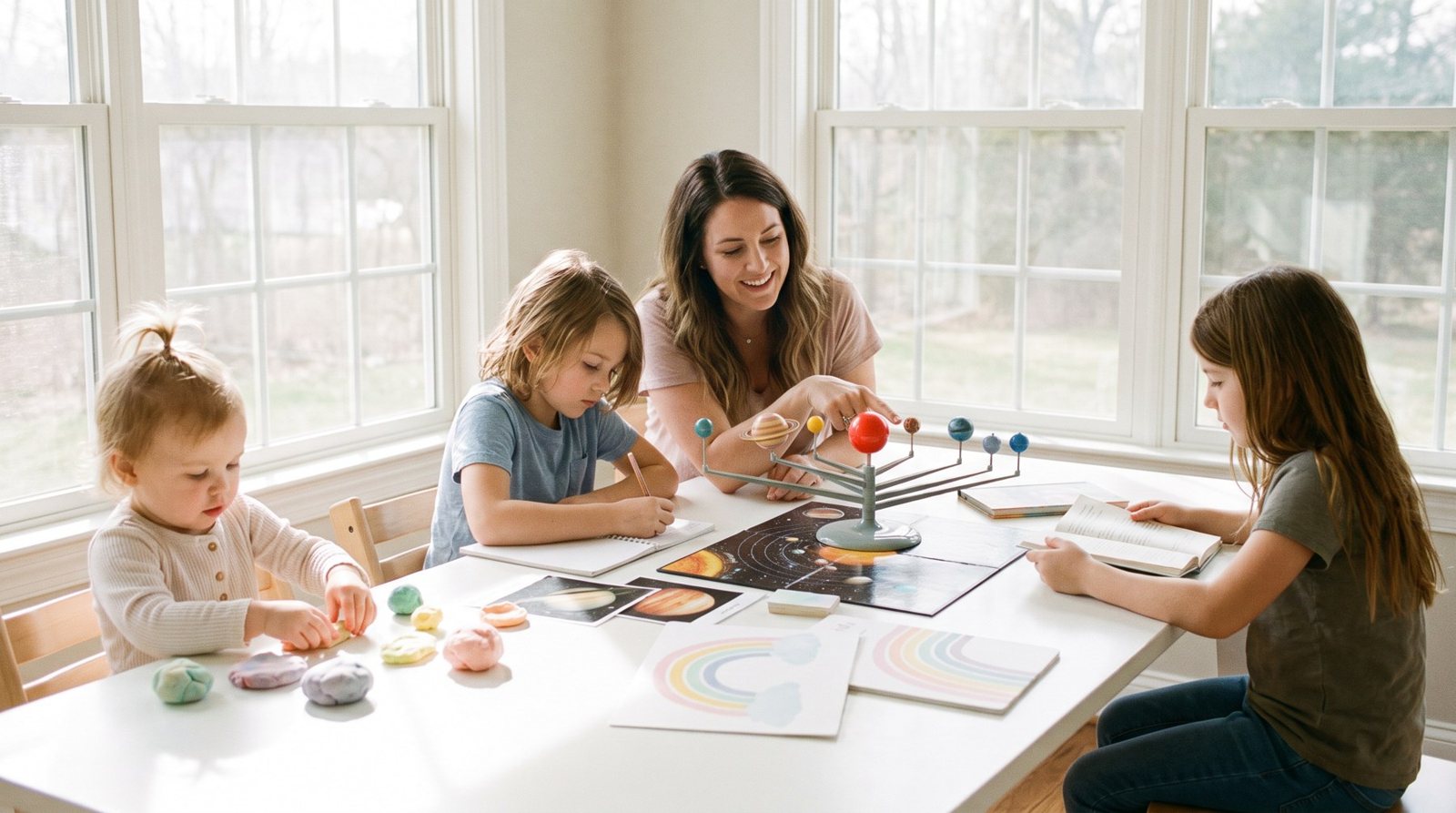
Toddlers often want to be part of what the big kids are doing. Instead of fighting that, give them a seat at the table.
Say your older kids are reading The Mitten by Jan Brett. Your preschooler can stuff felt or paper animals into a paper mitten while siblings retell the story in order. If the big kids are studying Blueberries for Sal by Robert McCloskey, the little one can drop blue pom-poms into a tin pail and listen for the "kuplink, kuplank, kuplunk."
This kind of shared theme is the heart of homeschooling multiple ages. Everyone gathers around the same book, and each child does what they are ready for. Our list of winter picture books for kids is full of stories that work beautifully for toddlers and older siblings alike.
Make older siblings your helpers (in small doses)
Big kids can be wonderful helpers, as long as the job stays short and fair. A ten-minute sibling read-aloud is practice in reading fluency for one child and pure delight for the other. A Middle can lead a simple craft, and a Big can run a quick game of "I Spy."
A few guidelines keep it healthy:
- Keep helper jobs brief and on a rotation.
- Count them as real learning, not a chore.
- Never make an older child responsible for a toddler's safety.
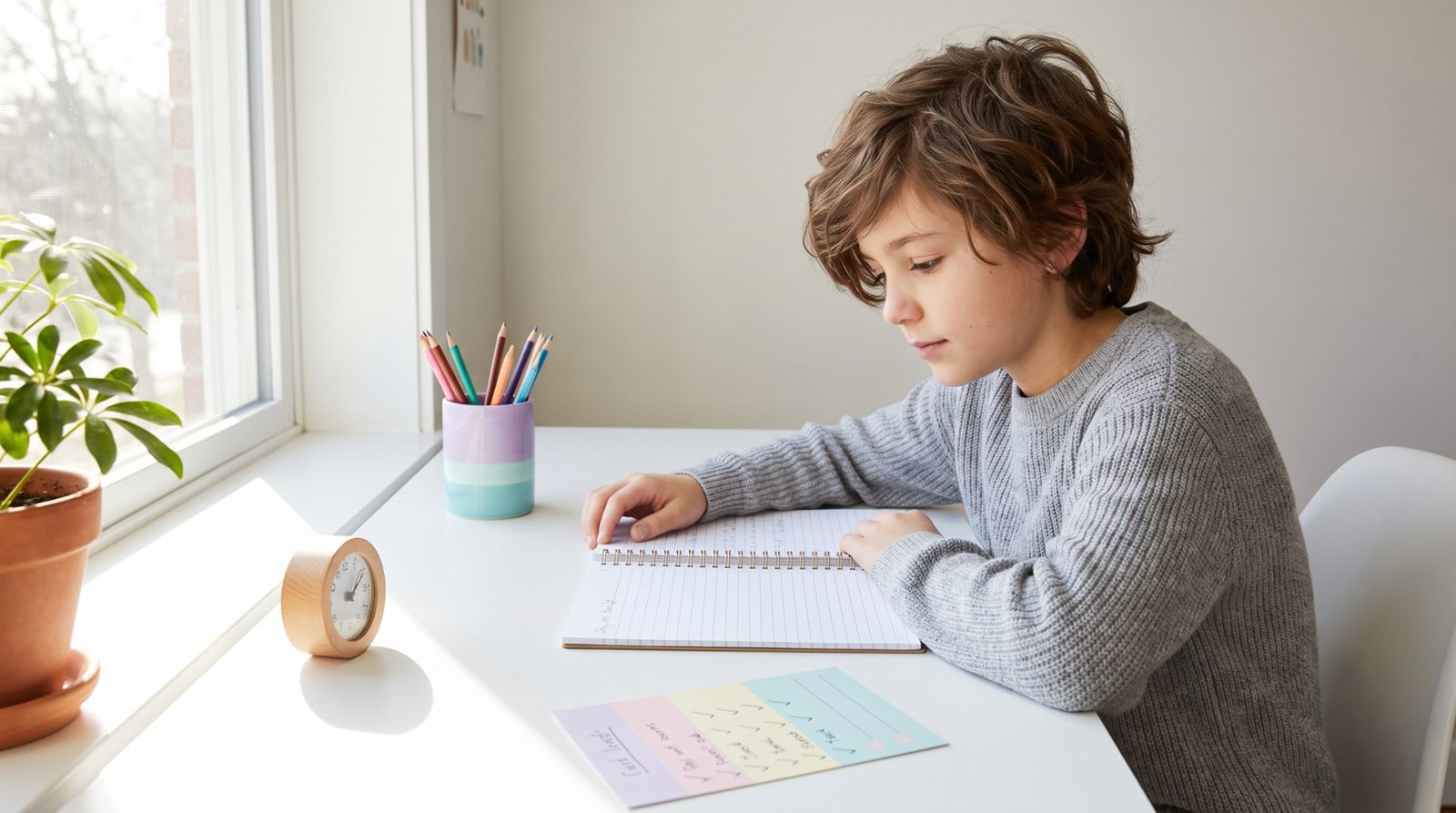
Helper time pairs nicely with the independent work your older kids do on their own. For ideas by level, see our guide to homeschool independent work.
When the day falls apart anyway
Some days, the toddler is teething, the baby will not settle, and nothing goes to plan. That is not failure. That is life with small children.
On those days, shrink the plan. Read one great picture book aloud on the couch. Go outside. Let the older kids do a puzzle or listen to an audiobook. One gentle, connected day will not set anyone back, and your kids will remember the cuddles more than the worksheets.
Frequently asked questions
How do I homeschool with a toddler in the house?
Plan for the toddler as carefully as you plan lessons. Start the day with a few minutes of undivided attention, keep a set of rotating busy bins for lesson time, invite them to the table with their own simple activity, and schedule the most focused teaching for nap or quiet time. Short lessons are much easier to protect.
What are good busy bins for toddlers?
Good busy bins are simple, safe, and open-ended. Try pom-poms with a muffin tin and tongs, chunky wooden puzzles, stickers and paper, magnetic tiles, play dough with cookie cutters, or a dry pasta scoop-and-pour tray. Always match items to your child's age and supervise anything that could be a choking hazard.
How long can a toddler play independently?
It varies a lot by child and age. Many toddlers manage only five to fifteen minutes of independent play at first, and that is normal. Independent play grows with practice, so start short, praise the effort, and slowly stretch the time. Novelty, like a bin that only comes out during lessons, helps.
Should my preschooler join our homeschool lessons?
Your preschooler can join whenever they want to, without any pressure to keep up. Many little ones love listening to picture book read-alouds, joining a simple art project, or showing their work on sharing day. Let them drift in and out. They absorb more than you might expect just by being nearby.
What can older siblings do to help with younger kids?
Older siblings can read picture books aloud, play a short game, or lead a simple craft with the toddler. Keep these jobs brief and voluntary, and count them as real learning, since reading aloud builds fluency and teaching builds understanding. Rotate helpers so no one child carries the job every day.
A little planning, a lot more peace
You do not need a silent house to homeschool well. When you keep younger kids busy while homeschooling with a mix of good timing, rotating bins, and invitations to join in, the whole troupe gets what it needs. Start with three bins and ten minutes of cuddles, and build from there.
Step right up: Want a week of learning the little ones can join too? Grab the free Popcorn Planner. It turns any picture book into a bite-sized, five-day week for Littles, Middles and Bigs, and it includes a fully worked Blueberries for Sal week to get you started.