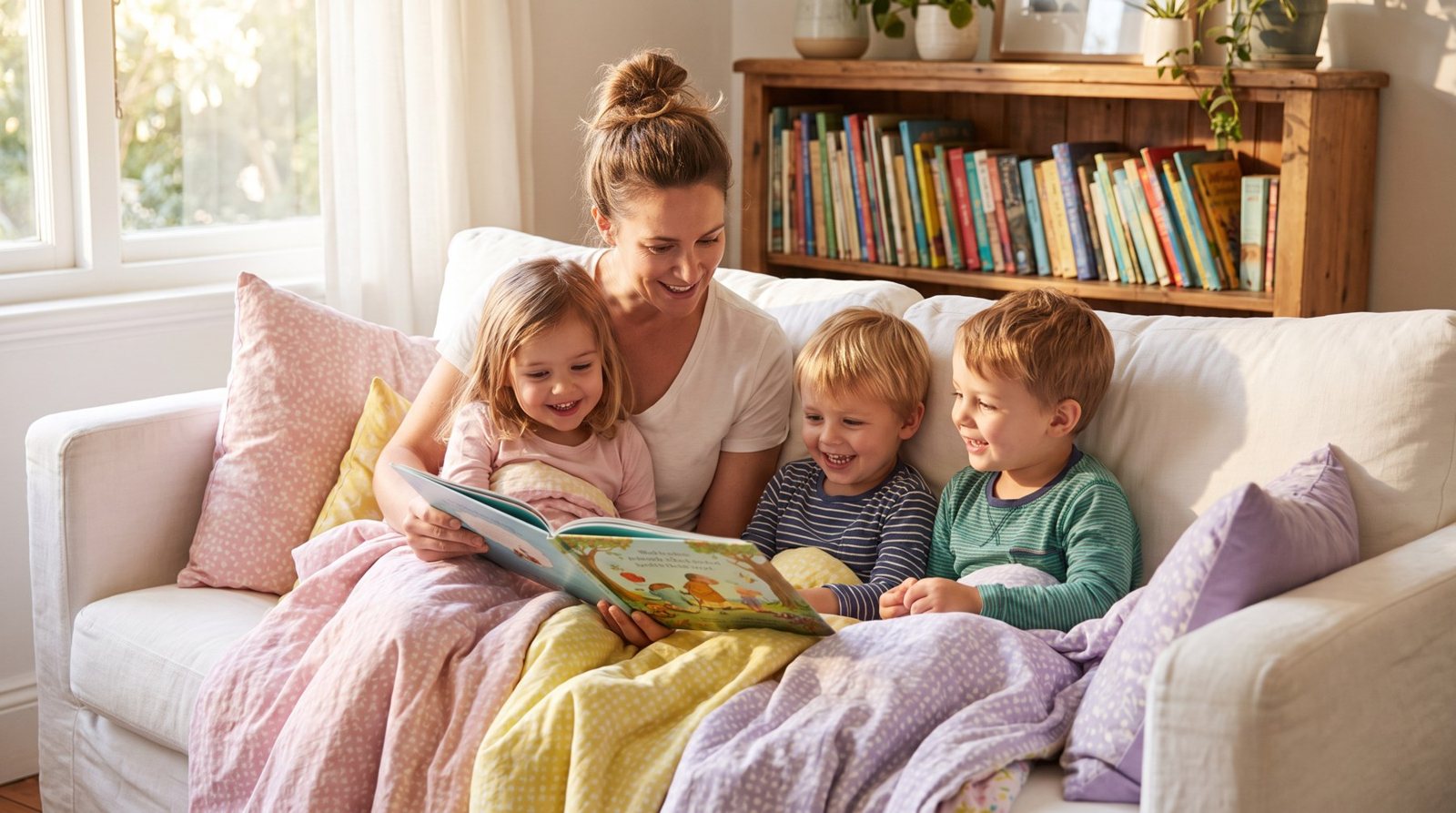
A literature-based homeschool puts real books at the center of the day. Instead of starting with a textbook and adding a story on the side, you start with a wonderful book and let the learning grow out of it: words, history, science, math, art and big conversations.
If you are wondering whether this approach can really cover "everything," the short answer is yes, with a simple plan behind it. Kids remember what they care about, and a good story makes them care.
This guide walks you through what this approach is, why so many families love it, how to choose books, and how to turn one book into a full, happy week for Littles, Middles and Bigs. Step right up.
Quick answer: A literature-based homeschool uses quality picture books, chapter books and nonfiction (often called "living books") as the main teaching tool. You read aloud together, then branch into narration, vocabulary, writing, science, math and hands-on projects connected to the book. Add a simple weekly rhythm and a separate math program if you like, and you have a complete, flexible curriculum for K-8.
What is a literature-based homeschool?
Literature-based learning is a way of teaching where stories and well-written nonfiction do the heavy lifting. A family might read Make Way for Ducklings by Robert McCloskey and then:
- map the ducklings' route through Boston,
- learn about mallards and their habitat,
- count and add ducklings in a math game,
- practice describing words from the text,
- and act out the story with stick puppets on Friday.
The book is the hook. Everything else is a natural next step from a question your child already has.
Living books vs. textbooks
You will often hear the phrase "living books," a term that comes from the Charlotte Mason tradition. A living book is written by someone who loves the subject, usually in a narrative voice, so ideas feel alive instead of boiled down into bullet points.
Textbooks are not the enemy. They are tidy and efficient, and some subjects (math especially) benefit from a clear sequence. This approach simply flips the default: books first, worksheets only when they help.
Is it the same as Charlotte Mason or unit studies?
They overlap, and that is fine. Charlotte Mason families lean on living books, narration and nature study. Unit study families build a theme across subjects. Literature-based learning borrows the best of both: the book is the anchor, and a short theme often forms around it. If you love the theme idea, our guide to homeschool unit studies goes deeper.
Why families love learning through literature
Families choose this path for lots of reasons. Here are the ones we hear most.
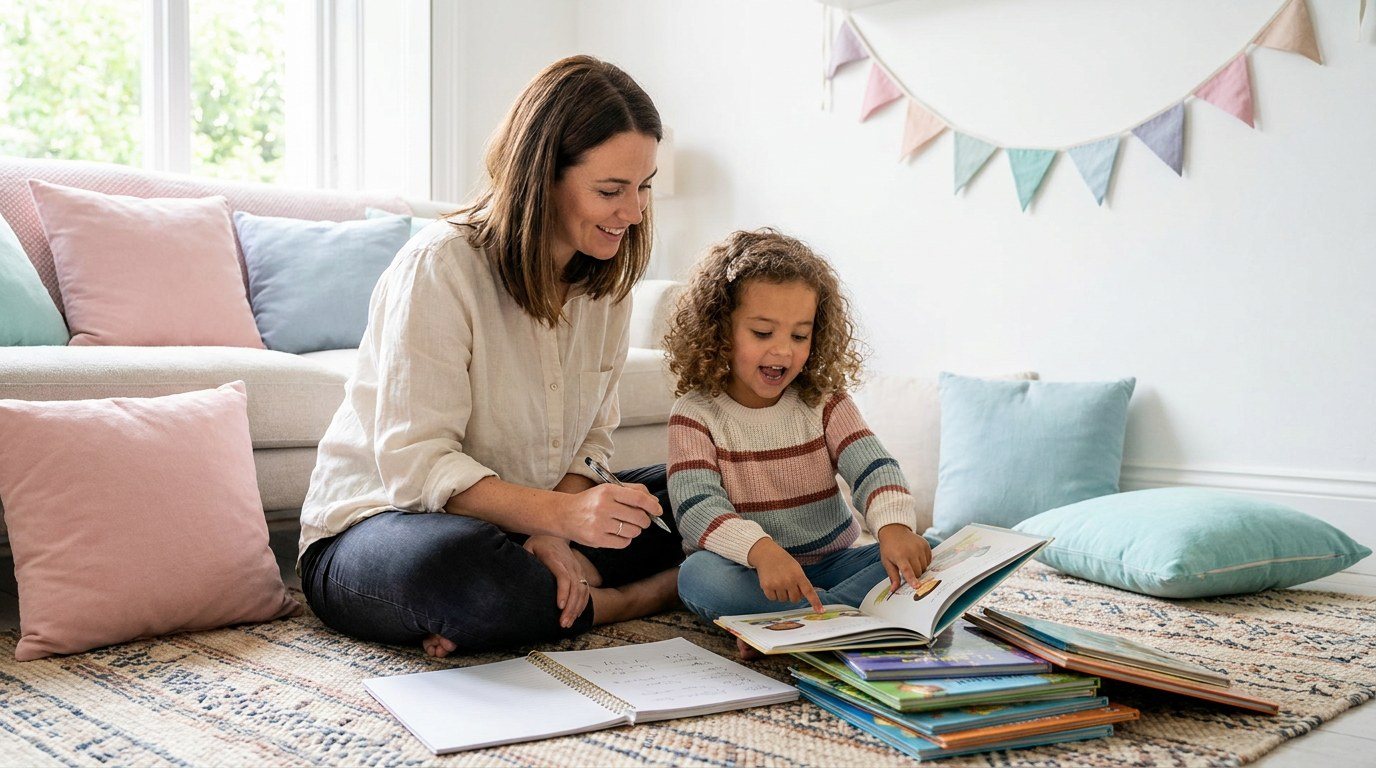
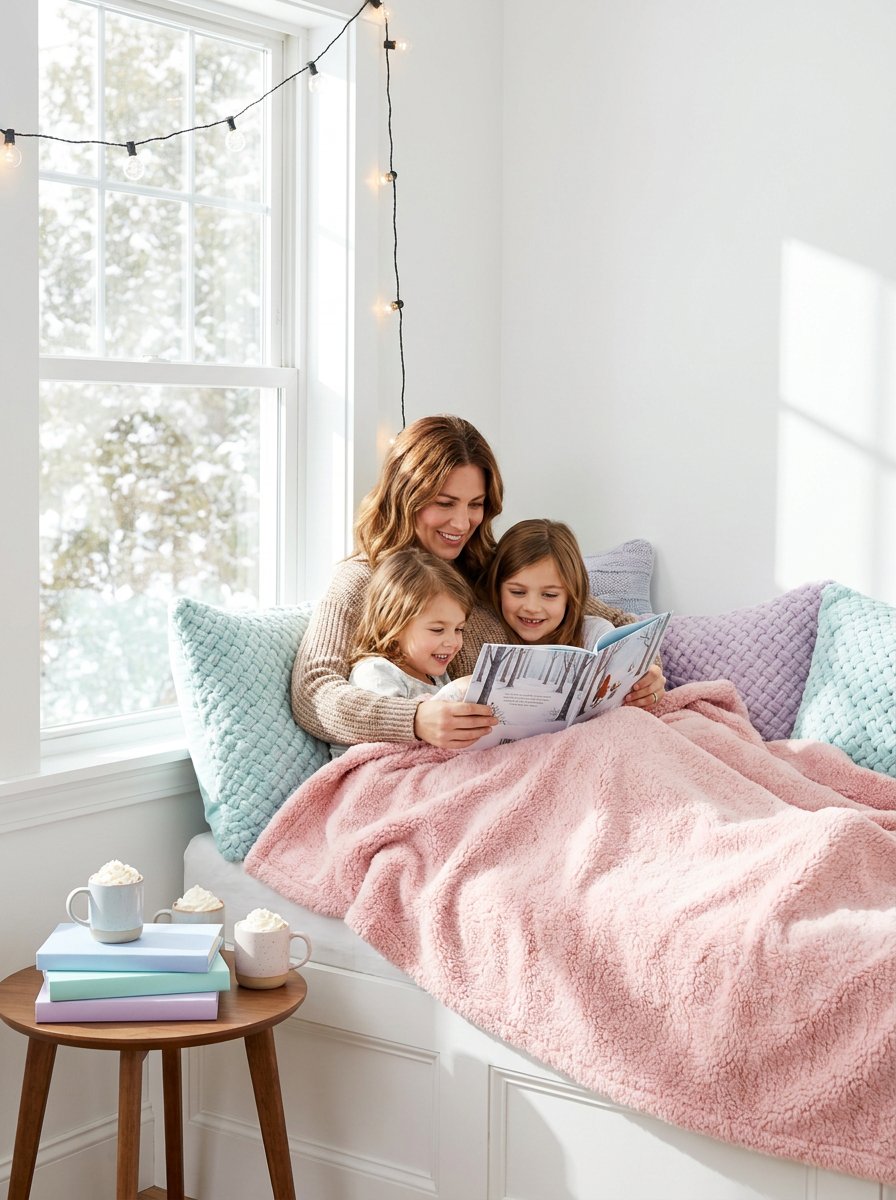
It feels like family time, not school-at-home. Reading aloud on the couch with a blanket and a snack is about as cozy as learning gets. Many moms tell us this is the part of the day they actually look forward to.
It works for more than one age. A picture book can hold a kindergartner and a seventh grader at the same time. The little one enjoys the pictures and rhythm. The older one notices the author's choices, the history, or the science hiding inside. That makes it a natural fit if you are homeschooling multiple ages.
Kids build vocabulary and attention span. Good books use rich language that kids rarely hear in everyday conversation. Hearing it again and again, in context, is one of the gentlest ways to grow a reader and a writer.
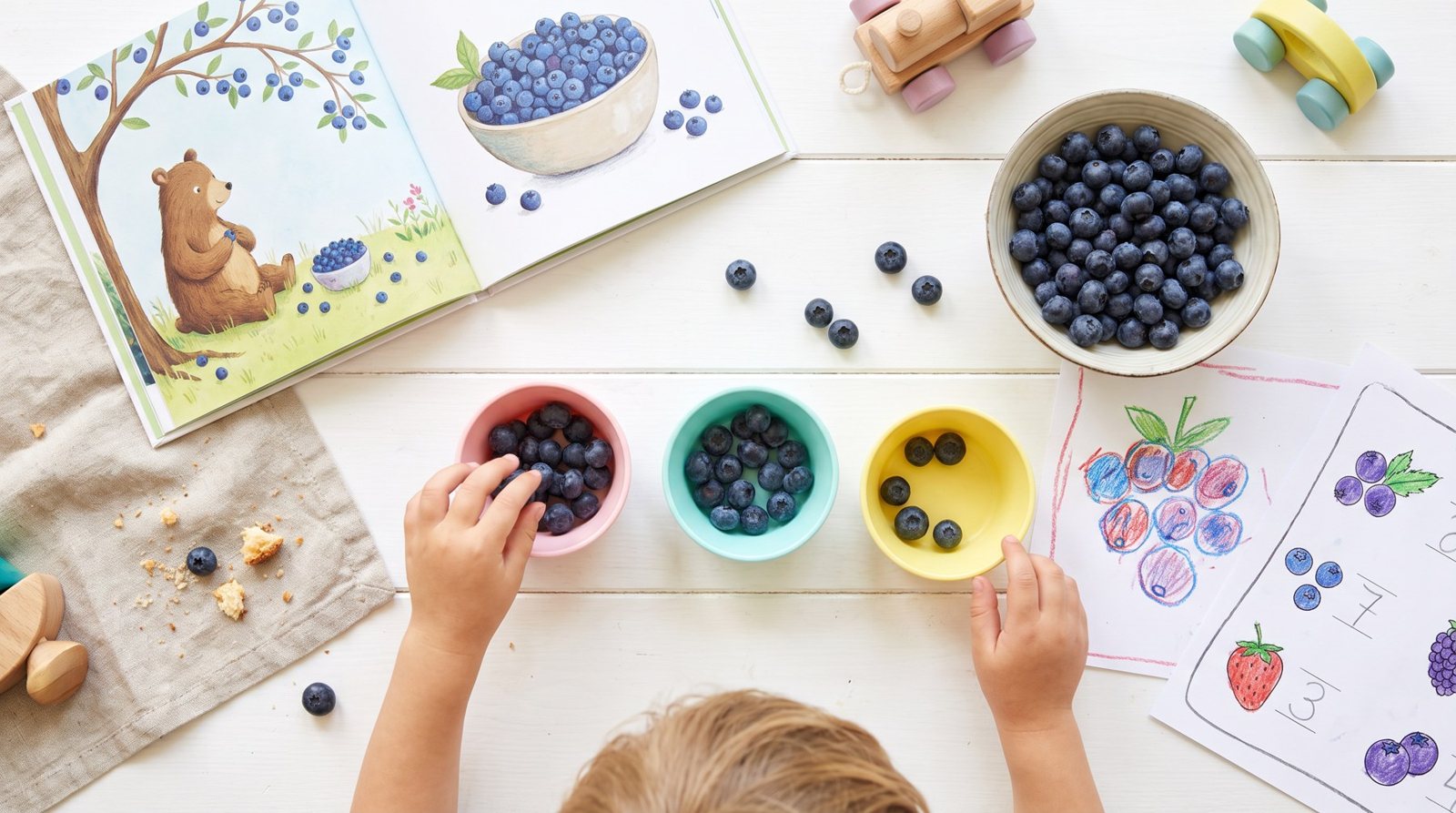
It sparks real questions. Why do the bears in Blueberries for Sal eat so many berries before winter? How did Snowflake Bentley photograph a single flake? Questions like these lead to the best lessons, because your child asked first.
It is flexible and affordable. Your library card is a powerful curriculum tool. You can follow interests, slow down, or speed up without throwing out an expensive boxed set.
I grew up in my mom's classroom, tucked in the reading corner with a stack of library books, and I can tell you: the books you share now become part of your family's story.
How to choose books for your literature-based homeschool
The quality of the books makes or breaks this approach. Here is a simple checklist.
- Pick books you enjoy reading aloud. If you dread a book, your kids will feel it. Life is too short.
- Look for rich language. Read a page out loud in the library. Does it sound beautiful, funny or surprising? Keep it.
- Check for real content. The best picture books quietly carry history, science, geography or art. Ox-Cart Man by Donald Hall (illustrated by Barbara Cooney) is a gentle seasons-and-economics lesson in disguise.
- Mix fiction and nonfiction. Pair a story with a true book on the same topic. A story about owls pairs nicely with a nonfiction owl book from the library.
- Lean on award lists. The Caldecott and Newbery medals, chosen by the Association for Library Service to Children, are a reliable starting place.
- Ask your children's librarian. Librarians are wonderful book matchmakers and love a family with a specific request.
Great books to start with (by level)
Here is a starter shelf of well-loved classics, grouped by our three levels. Every one of these works as a read-aloud for the whole troupe, too.
| Level | Picture books | Chapter books and novels |
|---|---|---|
| Littles (K-3) | Blueberries for Sal (Robert McCloskey), The Snowy Day (Ezra Jack Keats), The Very Hungry Caterpillar (Eric Carle), Frog and Toad Are Friends (Arnold Lobel) | My Father's Dragon (Ruth Stiles Gannett), Mr. Popper's Penguins (Richard and Florence Atwater) |
| Middles (4-6) | Miss Rumphius (Barbara Cooney), Owl Moon (Jane Yolen), Snowflake Bentley (Jacqueline Briggs Martin) | Charlotte's Web (E.B. White), Little House in the Big Woods (Laura Ingalls Wilder), The Wild Robot (Peter Brown) |
| Bigs (7-8) | Ox-Cart Man (Donald Hall), The Man Who Walked Between the Towers (Mordicai Gerstein) | Hatchet (Gary Paulsen), Number the Stars (Lois Lowry), A Wrinkle in Time (Madeleine L'Engle) |
Do not feel you need all of these. One great book a week is plenty.
How to plan a week of literature-based learning
Here is where the magic turns practical. You do not need to plan every subject from scratch. You need a rhythm that repeats, so the book can slot right in.
Our 5-day rhythm
At Quaintly Curious we use the same simple rhythm every week. Each day has a job, and the book feeds every one of them.
- Monday: Read & Wonder. Read the book aloud. Look closely at the pictures. Ask, "What did you notice? What are you wondering?" Write the questions on a sticky note.
- Tuesday: Words & Worlds. Reread and focus on language and setting. Collect favorite words, try copywork or a short narration, and find the setting on a map.
- Wednesday: Nature & Number. Follow a science or math thread from the book. Go outside if you can. Measure, count, sort, graph or observe.
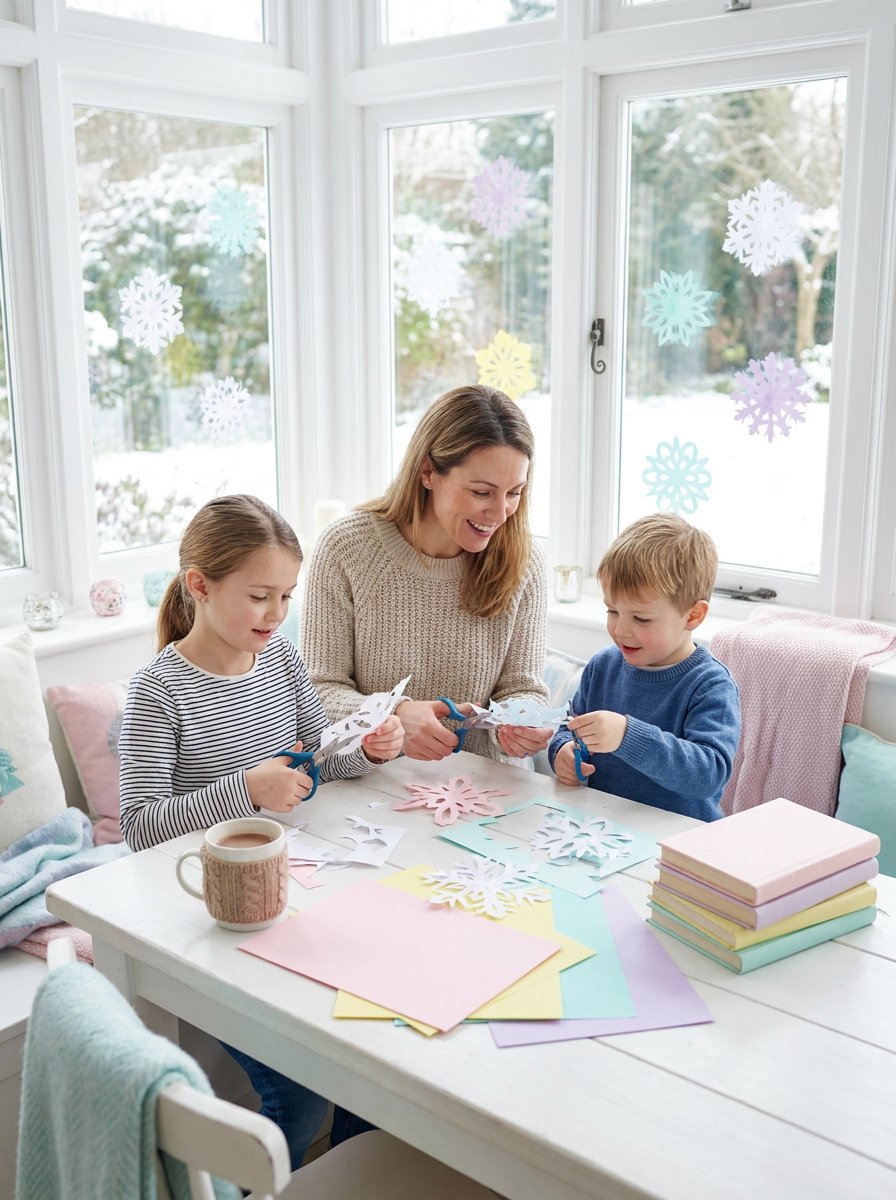
- Thursday: Make & Do. Get hands-on. Build, paint, cook, act it out, or make a model connected to the story.
- Friday: Showtime. Kids share what they made or learned. A puppet show, a reading, a poster or a "tour" of their project. Applause required.
This rhythm keeps you from reinventing the wheel each Sunday night. For a full walkthrough of planning (including how to fit math and other subjects around it), see our homeschool lesson planning guide.
Example: one book, a whole week
Let's take The Mitten by Jan Brett, a Ukrainian folktale retold with gorgeous bordered illustrations.
- Monday, Read & Wonder: Read it together. Point out the side panels that hint at which animal comes next. Ask, "How could all those animals fit?"
- Tuesday, Words & Worlds: Find Ukraine on a map. Littles collect animal names and sort them by size. Middles retell the story in order. Bigs compare it with another folktale retelling and note what changed.
- Wednesday, Nature & Number: Learn how the real animals in the story survive winter. Littles order animals from smallest to biggest. Middles graph animal weights from a library book. Bigs research which animals hibernate and which stay active.
- Thursday, Make & Do: Cut out a big paper mitten and animal puppets. Stuff them in and retell the story.
- Friday, Showtime: Kids perform the story for a grandparent on a video call, or for the dog. Both count.
That is a complete week, and it all came from one library book. If you want the step-by-step version you can use with any book, read how to create picture book lesson plans.
Want a shortcut? The free Popcorn Planner is a printable guide that "pops" any picture book into a bite-sized, five-day week for Littles, Middles and Bigs, with a worked Blueberries for Sal week to show you exactly how it looks.
Adapting literature-based learning for each level
One book, three levels. Here is how the same story stretches.
Littles (K-3)
Keep it short and sensory: 30 to 45 minutes a day is plenty. Littles love repeated readings, picture walks, acting out the story and simple crafts. Narration can be one or two sentences ("Tell me what happened"). Copywork can be a single word from the book.
Middles (4-6)
Middles can handle longer chapter books and more independent work, around 60 to 90 minutes a day. Ask for written narrations of a paragraph, simple research questions, and projects that take a couple of days. This is a great age for a family read-aloud novel alongside a weekly picture book.
Bigs (7-8)
Bigs are ready to think like readers and writers: 90 to 120 minutes a day with more independence. Ask them about theme, point of view and the author's choices. They can write an essay, research the historical setting, or lead the Friday Showtime for younger siblings. Do not skip picture books for this group. Many are sophisticated enough to spark serious discussion.
What about math, phonics and other subjects?
This is the most common worry, and it is a fair one.
Math: Most literature-based families use a separate, sequential math program and then add living math books for fun and context. Books like The Grapes of Math by Greg Tang or Sir Cumference and the First Round Table by Cindy Neuschwander make a lovely Wednesday add-on.
Phonics and early reading: Learning to decode usually needs direct, systematic practice. Keep a short daily phonics lesson for new readers, and let read-alouds handle the joy and vocabulary.
History and science: These fit beautifully inside literature. Historical fiction, biographies and nature books carry a lot of content, and your Wednesday and Thursday slots give it room to breathe.
Requirements: Homeschool laws vary by state, so check what your state expects for subjects, hours or records. HSLDA's state law page and your state's department of education are good places to start.
Making it easy: routines and tools
A few small habits keep a book-centered homeschool running smoothly.
- Keep a book basket. Put this week's book, a related nonfiction title and a poetry book in one spot. Kids drift toward it naturally. Reading from it first thing makes a lovely start to the day.
- Plan in pencil. Choose four books a month and leave room to follow a surprise interest. If your kids fall in love with owls, stay with owls.
- Use the library hold system. Request next week's books on Friday so they are waiting.
- Keep a family reading log. A simple list on the fridge becomes a proud record of everything you read together.
- Celebrate on Fridays. Showtime gives kids a reason to finish and a reason to be proud.
Go seasonal
Seasons give books a natural home. Winter is especially cozy: snow books, animal survival, ice science and long evenings for reading aloud. Our list of winter picture books for kids has 15 favorites, each with an easy activity to try.
Common mistakes (and easy fixes)
- Doing too much with one book. You do not need 14 activities. One activity a day is enough. Leave them wanting more.
- Choosing books you think you "should" read. Start with books your family loves. Taste grows over time.
- Skipping the rereads. Rereading is where the deeper learning happens. Kids notice new things each time.
- Forgetting to let kids lead. Their questions on Monday are your best lesson plan for the rest of the week.
- Turning every book into a test. Comprehension questions have their place, but conversation and narration build understanding more gently.
FAQ
What is literature-based homeschooling?
Literature-based homeschooling is an approach where quality books, both stories and nonfiction, are the main teaching tool. You read aloud together, then connect the book to vocabulary, writing, history, science, art and hands-on projects. Many families pair it with a separate math program. It feels more like family reading time than school-at-home, and it adapts well to different ages.
Can a literature-based homeschool be a complete curriculum?
Yes, for most subjects. Books can carry reading, writing, history, science, geography and art very well. Most families add a sequential math program and, for beginning readers, a short daily phonics lesson. Check your state's homeschool requirements to make sure you are covering the subjects it lists, and keep a simple record of the books and projects you complete.
How many books do you need for literature-based homeschooling?
Fewer than you think. One picture book a week, plus a family read-aloud chapter book you work through over several weeks, is plenty for most families. Add a related nonfiction title or two from the library. Rereading the same book across the week actually builds deeper understanding than racing through a big stack.
Is literature-based homeschooling good for multiple ages?
It is one of the best options for teaching more than one age. Everyone hears the same book together, then each child does a version of the activity that fits their level. A Little might draw a favorite scene, a Middle might write a paragraph, and a Big might analyze the author's choices. You plan one week instead of three.
Is literature-based homeschooling the same as Charlotte Mason?
Not exactly, though they overlap. Charlotte Mason is a full philosophy that uses living books, narration, nature study, short lessons and habit training. Literature-based homeschooling is broader: any approach that builds learning around quality books. Many families blend the two, borrowing narration and nature walks while keeping their own rhythm and favorite activities.
The wrap-up
A literature-based homeschool is not about owning the perfect bookshelf or planning the perfect lesson. It is about opening a great book with your kids, noticing what lights them up, and following that spark for a week. Start with one book you love. Add the five-day rhythm. Let Friday be a celebration.
You will be amazed how much learning fits inside a story.
Step right up: Want the books, the plans and the projects done for you? The Big Top is our seasonal homeschool membership: every month brings a four-week Act built on wonderful books, with separate lesson plans for Littles, Middles and Bigs, weekly puzzles and a Friday Showtime with the Troupe. One flat price of $33 a month covers the whole family. Not ready yet? Grab the free Popcorn Planner and turn any picture book into a five-day week of learning.